BLUETTI wins on value, with the most battery, inverter and solar input per dollar at every size. EcoFlow wins if you want one system that grows from a 1 kWh box to whole-home 240V backup, and Jackery wins for the lightest, simplest unit at a given capacity.
Our picks at a glance
From published specs and our sizing rules. Not lab tested.
- 1
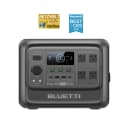
BLUETTI: best value
BLUETTI Elite 100 V2
1,024 Wh battery
Check price at BLUETTIPaid link
- 2
Jackery: lightest 1 kWh
Jackery Explorer 1000 v2
1,070 Wh battery
Check price on AmazonPaid link
- 3
EcoFlow: expandable
EcoFlow DELTA 3 Plus
1,024 Wh battery
Check price on AmazonPaid link
Most people buy in the 1 kWh class, so that is where the quick picks sit. At around $499, the BLUETTI Elite 100 V2 gives you 1,024 Wh, an 1,800 W inverter, 1,000 W of solar input and a 10 ms UPS at 25.3 lb. The Jackery Explorer 1000 v2 ($250 to $500) has more capacity and less weight. The EcoFlow DELTA 3 Plus costs more and is the only one of the three that expands to 5 kWh.
All three brands now use LiFePO4 cells across these lines, so cell chemistry no longer separates them. The real differences are inverter size, UPS switchover speed, solar input, weight and whether you can add batteries later. Every number below comes from the maker's spec sheet.
Top picks, and why
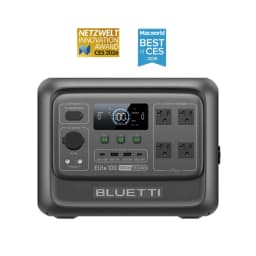
1,024Wh battery
BLUETTI Elite 100 V2
- 1.0 kWh
- 1,800 W continuous
1,024 Wh, 1,800 W continuous, 3,600 W surge and 1,000 W of solar input for around $499. It also has a 10 ms UPS and weighs 25.3 lb. No other 1 kWh unit here matches that spec sheet at this price, so buy this one unless you need expansion.
- 1,000 W solar input, tied for highest of the 1 kWh class
- 1,800 W inverter runs a coffee maker or microwave
- 10 ms UPS switchover
- Four AC outlets, fewer than the six-outlet 1 kWh units
- Not split-phase, no 240V
About $499 at BLUETTI, checked Oct 10, 2026
Check price at BLUETTIPaid link. We earn a commission at no cost to you.
Jackery Explorer 1000 v2
- 1.1 kWh
- 1,500 W continuous
1,070 Wh at 23.8 lb for $250 to $500, the most capacity per pound in the class. The 1,500 W inverter and 400 W solar input trail the others, but they cover a fridge, CPAP and router without trouble. Buy it if you carry it to a campsite as often as you plug it in at home.
- Lightest 1 kWh class unit in our list at 23.8 lb
- About 17 hours of a full-size fridge per charge
- 1,500 W inverter runs a coffee maker or small microwave
- 400 W solar input, lowest of the 1 kWh class
- Three AC outlets
$250 to $500, live price on Amazon
Check price on AmazonPaid link. We earn a commission at no cost to you.
EcoFlow DELTA 3 Plus
- 1.0 kWh
- expands to 5 kWh
- 1,800 W continuous
1,024 Wh, 1,800 W, six AC outlets, a 10 ms UPS and 1,000 W of solar across two inputs. It costs $500 to $1,000 and expands to 5 kWh with extra batteries. Buy it if you expect to grow into multi-day outage backup and only want to buy the main unit once.
- 1,000 W solar input, double the DELTA 3
- Expands to 5 kWh, about 2 days of fridge
- Six AC outlets and 10 ms UPS switchover
- 1,024 Wh base, about 17 hours of fridge before expansion
- Not split-phase, no 240V
$500 to $1,000, live price on Amazon
Check price on AmazonPaid link. We earn a commission at no cost to you.
Will it run your stuff?
Tick what you need to keep running. Every pick below re-sorts by how long it lasts on one charge.
Average draw about 104 W, peak about 1,251 W when the biggest motor starts.
- Check price on Amazon
EcoFlow DELTA Pro Ultra
6,144 Wh, Over $2,000
about 2 days
Paid link
- Check price on Amazon
Jackery Explorer 5000 Plus
5,040 Wh, Over $2,000
about 41 hours
Paid link
- Check price on Amazon
EcoFlow DELTA Pro 3
4,096 Wh, Over $2,000
about 34 hours
Paid link
- Check price at Anker SOLIX
Anker SOLIX F3800 Plus
3,840 Wh, About $2,400 at Anker SOLIX
about 32 hours
Paid link
- Check price on Amazon
Jackery HomePower 3600 Plus
3,584 Wh, $1,000 to $2,000
about 29 hours
Paid link
- Check price at BLUETTI
BLUETTI Apex 300
2,765 Wh, About $1,599 at BLUETTI
about 23 hours
Paid link
- Check price at BLUETTI
BLUETTI Elite 200 V2
2,074 Wh, About $899 at BLUETTI
about 17 hours
Paid link
- Check price on Amazon
EcoFlow DELTA 2 Max
2,048 Wh, $500 to $1,000
about 17 hours
Paid link
- Check price at BLUETTI
BLUETTI AC200L
2,048 Wh, About $899 at BLUETTI
about 17 hours
Paid link
- Check price at Anker SOLIX
Anker SOLIX C2000 Gen 2
2,048 Wh, About $900 at Anker SOLIX
about 17 hours
Paid link
- Check price on Amazon
Jackery Explorer 2000 v2
2,042 Wh, $500 to $1,000
about 17 hours
Paid link
- Check price on Amazon
Jackery Explorer 2000 Plus
2,042 Wh, $1,000 to $2,000
about 17 hours
Paid link
- Check price at BLUETTI
BLUETTI AC180
1,152 Wh, About $499 at BLUETTI
about 9.5 hours
Paid link
- Check price on Amazon
Jackery Explorer 1000 v2
1,070 Wh, $250 to $500
about 9 hours
Paid link
- Check price at Anker SOLIX
Anker SOLIX C1000
1,056 Wh, About $470 at Anker SOLIX
about 8.5 hours
Paid link
- Check price at BLUETTI
BLUETTI Elite 100 V2
1,024 Wh, About $499 at BLUETTI
about 8.5 hours
Paid link
- Check price on Amazon
EcoFlow DELTA 3 Plus
1,024 Wh, $500 to $1,000
about 8.5 hours
Paid link
- Check price on Amazon
EcoFlow DELTA 3
1,024 Wh, $500 to $1,000
about 8.5 hours
Paid link
- Check price on Amazon
EcoFlow RIVER 3 Plus
286 Wh, $250 to $500
Can't start it
Paid link
Runtime = capacity x 0.85 inverter efficiency / average draw, with fridges and freezers cycling on their compressors. Amazon links are paid links. Amazon prices change, so we show a range.
Compare every pick
Paid links: we earn a commission if you buy, at no cost to you. Amazon prices change often, so we show a range and link to the live price.
Head to head at 1 kWh
BLUETTI takes this class. The Elite 100 V2 and the EcoFlow DELTA 3 Plus share the same core numbers, 1,024 Wh, 1,800 W, 3,600 W surge, 1,000 W solar and 10 ms UPS, and the BLUETTI is usually cheaper and 2.3 lb lighter.
Jackery's Explorer 1000 v2 has the most capacity at 1,070 Wh and the lowest weight at 23.8 lb. It gives up inverter size (1,500 W), solar input (400 W) and UPS speed (20 ms). None of that matters for a fridge or CPAP. It does matter if you run a 1,500 W microwave or want to refill from panels in a few hours.
Two more units are worth a look. The BLUETTI AC180 has 1,152 Wh for around $499 but weighs 35.3 lb and switches in 20 ms. The EcoFlow DELTA 3 drops to 500 W solar for $500 to $1,000 and keeps the 5 kWh expansion. For fridge runtime, any of these gives about 17 to 19 hours, and our power station sizer will run the numbers for your own appliances.
1,024Wh battery
BLUETTI Elite 100 V2
- 1.0 kWh
- 1,800 W continuous
Same capacity, inverter, surge and solar input as the DELTA 3 Plus for around $499 instead of $500 to $1,000. The 10 ms UPS makes it safe under a CPAP or router. It is the default 1 kWh buy.
- 1,000 W solar input, tied for highest of the 1 kWh class
- 1,800 W inverter runs a coffee maker or microwave
- 10 ms UPS switchover
- Four AC outlets, fewer than the six-outlet 1 kWh units
- Not split-phase, no 240V
About $499 at BLUETTI, checked Oct 10, 2026
Check price at BLUETTIPaid link. We earn a commission at no cost to you.
Jackery Explorer 1000 v2
- 1.1 kWh
- 1,500 W continuous
1,070 Wh at 23.8 lb, for $250 to $500. The 1,500 W inverter and 3,000 W surge handle a fridge start-up with room to spare. Pick it when weight and capacity matter more than fast solar charging.
- Lightest 1 kWh class unit in our list at 23.8 lb
- About 17 hours of a full-size fridge per charge
- 1,500 W inverter runs a coffee maker or small microwave
- 400 W solar input, lowest of the 1 kWh class
- Three AC outlets
$250 to $500, live price on Amazon
Check price on AmazonPaid link. We earn a commission at no cost to you.
EcoFlow DELTA 3
- 1.0 kWh
- expands to 5 kWh
- 1,800 W continuous
1,024 Wh, 1,800 W, six outlets and a 10 ms UPS at $500 to $1,000, expandable to 5 kWh. It is the DELTA 3 Plus with 500 W of solar instead of 1,000 W. Buy it over the Plus if you charge from the wall, not panels.
- Six AC outlets and a 1,800 W inverter
- Expands to 5 kWh, about 2 days of fridge
- 10 ms UPS switchover
- 500 W solar input, half the DELTA 3 Plus
- Not split-phase, no 240V
$500 to $1,000, live price on Amazon
Check price on AmazonPaid link. We earn a commission at no cost to you.
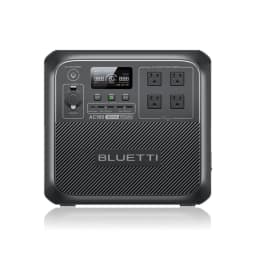
1,152Wh battery
BLUETTI AC180
- 1.2 kWh
- 1,800 W continuous
1,152 Wh and 1,800 W for around $499, the most capacity at that price. It weighs 35.3 lb and has a 20 ms UPS and 500 W solar. Get it for a stay-at-home outage unit where weight does not matter.
- 1,152 Wh, most capacity of the 1 kWh class
- About 19 hours of fridge or 3 CPAP nights
- 1,800 W inverter runs a coffee maker or microwave
- Heaviest of the 1 kWh class at 35.3 lb
- Previous-generation model with 20 ms switchover
About $499 at BLUETTI, checked Oct 10, 2026
Check price at BLUETTIPaid link. We earn a commission at no cost to you.
Head to head at 2 kWh
BLUETTI lists its 2 kWh units at around $899, EcoFlow's DELTA 2 Max sells for $500 to $1,000, and Jackery costs more. The BLUETTI Elite 200 V2 has the biggest inverter (2,600 W) and the only 10 ms UPS of these three units, but it does not expand. The EcoFlow DELTA 2 Max expands to 6 kWh and weighs 50.7 lb. The BLUETTI AC200L expands to 8 kWh and adds a 30 A RV outlet at 62.4 lb.
Jackery's Explorer 2000 v2 is the lightest 2 kWh box at 38.6 lb for $500 to $1,000, with a 2,200 W inverter and only 400 W of solar input. The Explorer 2000 Plus at $1,000 to $2,000 is the big upgrade, with a 3,000 W inverter, 1,400 W of solar and expansion to 12 kWh, at 61.5 lb.
A 2 kWh unit runs a full-size fridge for about 33 hours at house math (2,048 Wh x 0.85 over a 52 W average). That covers a typical overnight outage with the router and lights on too. The refrigerator guide breaks those runtimes down further.
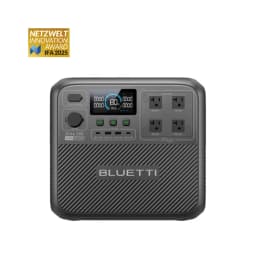
2,074Wh battery
BLUETTI Elite 200 V2
- 2.1 kWh
- 2,600 W continuous
2,074 Wh, 2,600 W continuous and a 10 ms UPS at around $899, rated for 6,000 cycles. It is the strongest inverter at this price. Buy it if 2 kWh is all you will ever need.
- Rated for 6,000 cycles
- 2,600 W inverter and 10 ms UPS switchover
- About 34 hours of a full-size fridge per charge
- Not expandable
- Over 50 lb at 53.4 lb
About $899 at BLUETTI, checked Oct 10, 2026
Check price at BLUETTIPaid link. We earn a commission at no cost to you.
EcoFlow DELTA 2 Max
- 2.0 kWh
- expands to 6 kWh
- 2,400 W continuous
2,048 Wh, 2,400 W, six AC outlets and 1,000 W solar at $500 to $1,000. It expands to 6 kWh with two extra batteries and weighs 50.7 lb. Choose it if you want room to grow without the 60 lb class.
- Expands to 6,144 Wh, about 3 days of fridge
- 2,400 W inverter and six AC outlets
- 1,000 W solar input
- Over 50 lb at 50.7 lb
- 20 ms switchover, slower than the DELTA 3 line
$500 to $1,000, live price on Amazon
Check price on AmazonPaid link. We earn a commission at no cost to you.
2,048Wh battery
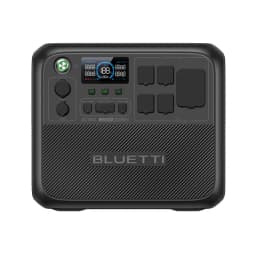
BLUETTI AC200L
- 2.0 kWh
- expands to 8 kWh
- 2,400 W continuous
2,048 Wh and 2,400 W with a 30 A RV outlet, 1,200 W solar input and expansion to 8 kWh, around $899. At 62.4 lb it stays put. Buy it for an RV or a house you will grow to a full day of backup.
- 30 A RV outlet for a camper
- Expands to 8,192 Wh, about 4 days of fridge
- 1,200 W solar input
- Over 60 lb at 62.4 lb
- Not split-phase, no 240V
About $899 at BLUETTI, checked Oct 10, 2026
Check price at BLUETTIPaid link. We earn a commission at no cost to you.
Jackery Explorer 2000 v2
- 2.0 kWh
- 2,200 W continuous
2,042 Wh and 2,200 W at 38.6 lb for $500 to $1,000. It is 12 to 24 lb lighter than the others here. Pick it if you will carry 2 kWh to a truck or campsite.
- Lightest 2 kWh unit in our list at 38.6 lb
- About 33 hours of a full-size fridge per charge
- 2,200 W inverter runs a microwave or coffee maker
- Not expandable, 2 kWh is the ceiling
- 400 W solar input, lowest of the 2 kWh units
$500 to $1,000, live price on Amazon
Check price on AmazonPaid link. We earn a commission at no cost to you.
Jackery Explorer 2000 Plus
- 2.0 kWh
- expands to 12 kWh
- 3,000 W continuous
3,000 W continuous, 6,000 W surge, 1,400 W solar input and expansion to 12 kWh, for $1,000 to $2,000. That inverter starts loads the 2,400 W units struggle with, like a well pump on 120V or a window AC plus fridge. Buy it when inverter size is the limit.
- Expands to 12 kWh, about 7 days of fridge
- 3,000 W inverter with 6,000 W surge
- 1,400 W solar input for faster panel recharging
- Over 60 lb at 61.5 lb
- Not split-phase, no 240V
$1,000 to $2,000, live price on Amazon
Check price on AmazonPaid link. We earn a commission at no cost to you.
Whole-home class
BLUETTI is the cheapest way into 240V, EcoFlow has the biggest systems, and Jackery has the strongest single unit at 7,200 W with a 0 ms UPS. Pick by budget and by whether you need 240V for a well pump, dryer or central AC.
The BLUETTI Apex 300 gives 2,765 Wh and 3,840 W at 120V and 240V for around $1,599, expandable to about 19 kWh. EcoFlow's DELTA Pro 3 has 4,096 Wh and 4,000 W at 240V for over $2,000. The DELTA Pro Ultra jumps to 6,144 Wh and 7,200 W for over $2,000 and stacks to 30 kWh.
Jackery splits the class. The HomePower 3600 Plus is 3,584 Wh and 3,600 W on 120V only for $1,000 to $2,000, so it suits homes with no 240V loads. The Explorer 5000 Plus is 5,040 Wh and 7,200 W at 240V with a 0 ms UPS for over $2,000. Our home battery backup sizer tells you which tier your house needs.
2,765Wh battery
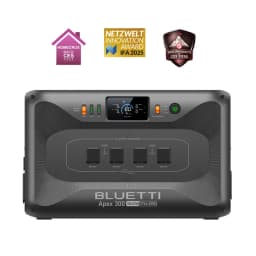
BLUETTI Apex 300
- 2.8 kWh
- expands to 19 kWh
- 3,840 W continuous
- 120/240V
2,765 Wh, 3,840 W continuous and 7,680 W surge at 120V and 240V, with a 10 ms UPS, for around $1,599. B300K packs take it to about 19 kWh. It is the lowest-cost way to run a 240V well pump on battery.
- 120V and 240V output, can run a 240V well pump
- 84 lb, the lightest 240V unit in this list
- Expands to 19.4 kWh with up to six B300K packs
- 3,840 W continuous, the lowest of the 240V units here
- 2.8 kWh base, the smallest starting capacity with 240V
About $1,599 at BLUETTI, checked Oct 10, 2026
Check price at BLUETTIPaid link. We earn a commission at no cost to you.
EcoFlow DELTA Pro 3
- 4.1 kWh
- expands to 12 kWh
- 4,000 W continuous
- 120/240V
4,096 Wh and 4,000 W at 120V and 240V with a 10 ms UPS and 2,600 W solar input, for over $2,000. It expands to about 12 kWh and works with EcoFlow's Smart Home Panel 2. Buy it for 4 kWh in one box on wheels.
- 120/240V split-phase output
- Home panel compatible
- 2,600 W solar input, highest in our list
- Over 100 lb at 113.5 lb
Over $2,000, live price on Amazon
Check price on AmazonPaid link. We earn a commission at no cost to you.
EcoFlow DELTA Pro Ultra
- 6.1 kWh
- expands to 31 kWh
- 7,200 W continuous
- 120/240V
6,144 Wh and 7,200 W at 240V, 5,600 W of solar input and up to 30 kWh per inverter, for over $2,000. It is the system for running central AC or several days off-grid. Buy it if the sizer says you need more than 10 kWh.
- 7,200 W at 120/240V, can run 240V loads like a well pump
- Expands to 30.7 kWh with five extra batteries
- 5,600 W solar input, more than any Anker or BLUETTI unit here
- 164 lb with one battery, heavy to move
- 6 AC outlets vs 8 on the Anker F3800 models
Over $2,000, live price on Amazon
Check price on AmazonPaid link. We earn a commission at no cost to you.
Jackery Explorer 5000 Plus
- 5.0 kWh
- expands to 30 kWh
- 7,200 W continuous
- 120/240V
5,040 Wh, 7,200 W continuous and 14,400 W surge at 240V with a 0 ms UPS, for over $2,000. That surge starts nearly anything in a house. Buy it when one box has to start a well pump and an AC compressor.
- 0 ms UPS mode, the fastest switchover here
- 7,200 W at 120/240V with a 14,400 W surge
- Pairs with Jackery's 60 A smart transfer switch
- 132 lb, plan to keep it in one place
Over $2,000, live price on Amazon
Check price on AmazonPaid link. We earn a commission at no cost to you.
Jackery HomePower 3600 Plus
- 3.6 kWh
- expands to 22 kWh
- 3,600 W continuous
3,584 Wh and 3,600 W for $1,000 to $2,000, expandable to about 21.5 kWh. It is 120V only, so it fits homes on city water with gas appliances. Buy it for fridge, furnace, lights and internet across a multi-day outage.
- 3,600 W on 120V, expands to 21.5 kWh with five packs
- 77 lb, lighter than every unit here except the Elite 200 V2
- Home panel compatible
- 120V only, needs a second unit for 240V
- Not for well pumps or other 240V loads on one unit
$1,000 to $2,000, live price on Amazon
Check price on AmazonPaid link. We earn a commission at no cost to you.
Where Anker SOLIX fits
Anker SOLIX is the fourth brand worth a look, and it sits between the others on price. The C1000 (about $470) has 1,056 Wh, 1,800 W and six AC outlets, with a 20 ms UPS and expansion to 2 kWh. The C1000 Gen 2 (about $500) drops to 24.9 lb with a 2,000 W inverter and 10 ms UPS.
At 2 kWh, the C2000 Gen 2 is 2,048 Wh and 2,400 W at 41.7 lb for about $900, with a TT-30 RV outlet and a 10 ms UPS. At whole-home size, the F3800 Plus has 3,840 Wh, 6,000 W and 240V for about $2,400, and expands to nearly 27 kWh.
Anker SOLIX C1000
- 1.1 kWh
- expands to 2 kWh
- 1,800 W continuous
1,056 Wh, 1,800 W and six AC outlets for about $470, expandable to 2,112 Wh. It has more outlets than the BLUETTI or Jackery at a similar price. Buy it if you plug in many small loads at once.
- Six AC outlets and an 1,800 W inverter
- About 17 hours of fridge, 29 with the expansion battery
- Expansion tops out at 2,112 Wh
- 20 ms switchover, slower than the C1000 Gen 2
About $470 at Anker SOLIX, checked Oct 13, 2026
Check price at Anker SOLIXPaid link. We earn a commission at no cost to you.
Anker SOLIX C2000 Gen 2
- 2.0 kWh
- expands to 4 kWh
- 2,400 W continuous
2,048 Wh, 2,400 W and a 10 ms UPS at 41.7 lb, for about $900. It is only 3 lb heavier than the Jackery 2000 v2 with a bigger inverter and faster UPS. A strong pick for vans and RVs with the TT-30 outlet.
- TT-30 RV outlet for a camper
- Expands to 4,096 Wh, about 2 days of fridge
- 10 ms UPS switchover
- Expansion tops out at 4 kWh
- Not split-phase, no 240V
About $900 at Anker SOLIX, checked Oct 13, 2026
Check price at Anker SOLIXPaid link. We earn a commission at no cost to you.
Anker SOLIX F3800 Plus
- 3.8 kWh
- expands to 27 kWh
- 6,000 W continuous
- 120/240V
3,840 Wh, 6,000 W continuous and 9,000 W surge at 120V and 240V, for about $2,400. It expands to 26.9 kWh with BP3800 packs. Buy it for the most 240V inverter per dollar.
- 120/240V split phase, so it can run 240V loads like a well pump
- 9,000 W surge covers a 1/2 HP well pump start
- 3,200 W solar input, more than the original F3800 (2,400 W)
- 137 lb, plan to keep it in one place
- 20 ms switchover, slower than the 0 ms Jackery Explorer 5000 Plus
About $2,400 at Anker SOLIX, checked Oct 13, 2026
Check price at Anker SOLIXPaid link. We earn a commission at no cost to you.
Which brand should you buy
For a CPAP, buy BLUETTI or EcoFlow for the 10 ms UPS. The Elite 100 V2 gives about 22 hours at 40 W, and the RIVER 3 Plus covers most of a night for $250 to $500.
For a fridge during outages, buy the BLUETTI Elite 100 V2 for a day, or the Elite 200 V2 for about a day and a half. Both keep a 52 W average fridge running with capacity left for a router and lights.
For whole-home backup, buy BLUETTI for the cheapest 240V, EcoFlow for the biggest system, or Jackery for the strongest single box. Run our home battery backup sizer first. If the answer is more than 15 kWh, our generator sizer may show a cheaper path.
For camping and weight, buy Jackery. The Explorer 1000 v2 at 23.8 lb and the 2000 v2 at 38.6 lb are the lightest in their classes.
For solar charging speed, buy BLUETTI or EcoFlow. The Elite 100 V2 and DELTA 3 Plus each take 1,000 W of solar at 1 kWh, against 400 W on the Jackery. At 2 kWh, the Jackery 2000 Plus leads with 1,400 W.
EcoFlow RIVER 3 Plus
- 0.3 kWh
- expands to 1 kWh
- 600 W continuous
286 Wh, a 10 ms UPS and 10.4 lb for $250 to $500. It covers most of a 40 W night with the humidifier off and can live plugged in under the bed. The cheapest UPS-grade CPAP unit from the big brands.
- 10 ms UPS switchover for a CPAP or router
- Add-on batteries reach 858 Wh, about 2 CPAP nights
- Three AC outlets at 10.4 lb
- 600 W inverter: no microwave or kettle
- 286 Wh alone is about 6 hours of CPAP
$250 to $500, live price on Amazon
Check price on AmazonPaid link. We earn a commission at no cost to you.
1,024Wh battery
BLUETTI Elite 100 V2
- 1.0 kWh
- 1,800 W continuous
About 17 hours of fridge runtime from 1,024 Wh, and 1,000 W of solar to refill it in a sunny afternoon. Around $499. The best all-round outage unit at this size.
- 1,000 W solar input, tied for highest of the 1 kWh class
- 1,800 W inverter runs a coffee maker or microwave
- 10 ms UPS switchover
- Four AC outlets, fewer than the six-outlet 1 kWh units
- Not split-phase, no 240V
About $499 at BLUETTI, checked Oct 10, 2026
Check price at BLUETTIPaid link. We earn a commission at no cost to you.
Jackery Explorer 1000 v2
- 1.1 kWh
- 1,500 W continuous
1,070 Wh at 23.8 lb, for $250 to $500. It is the most capacity you can carry with one hand in this class. Buy it for trips where every pound counts.
- Lightest 1 kWh class unit in our list at 23.8 lb
- About 17 hours of a full-size fridge per charge
- 1,500 W inverter runs a coffee maker or small microwave
- 400 W solar input, lowest of the 1 kWh class
- Three AC outlets
$250 to $500, live price on Amazon
Check price on AmazonPaid link. We earn a commission at no cost to you.
The bottom line
From published specs and our sizing rules. Not lab tested.
- 1
BLUETTI: best value
BLUETTI Elite 100 V2
1,024 Wh battery
Check price at BLUETTIPaid link
- 2
Jackery: lightest 1 kWh
Jackery Explorer 1000 v2
1,070 Wh battery
Check price on AmazonPaid link
- 3
EcoFlow: expandable
EcoFlow DELTA 3 Plus
1,024 Wh battery
Check price on AmazonPaid link
Frequently asked questions
Is Jackery or EcoFlow better?
EcoFlow is better if you want faster UPS switching and expansion, and Jackery is better if you want less weight per watt-hour. At 1 kWh the EcoFlow DELTA 3 has a 10 ms UPS and expands to 5 kWh, while the Jackery Explorer 1000 v2 has more capacity at 23.8 lb and a lower price.
Is BLUETTI better than EcoFlow?
BLUETTI is usually better value for the same specs. The Elite 100 V2 matches the EcoFlow DELTA 3 Plus on capacity, inverter, surge, solar input and UPS speed for less money. EcoFlow is better if you need the unit to expand later.
Is Jackery better than BLUETTI?
Jackery is lighter, and BLUETTI gives more inverter and solar input for the money. The Explorer 1000 v2 weighs 23.8 lb against 25.3 lb for the Elite 100 V2, but the BLUETTI has a 1,800 W inverter, 1,000 W solar input and 10 ms UPS against Jackery's 1,500 W, 400 W and 20 ms.
What is the best power station brand?
BLUETTI, EcoFlow, Jackery and Anker SOLIX are the four main brands, and all use LiFePO4 cells. BLUETTI is the best value, EcoFlow has the largest expandable systems, Jackery is lightest per watt-hour, and Anker SOLIX gives the most outlets in the 1 kWh class.
Which power station brand lasts the longest?
All four big brands now use LiFePO4 cells, which are commonly rated for 3,000 cycles or more. BLUETTI rates the Elite 200 V2 for 6,000 cycles. Battery life depends more on chemistry and how deeply you drain it than on the brand name.
Which brand has the fastest UPS switchover?
Jackery's Explorer 5000 Plus advertises 0 ms, the fastest of any unit here. Below that, the EcoFlow DELTA 3 line, BLUETTI Elite line and newer Anker units such as the C1000 Gen 2 advertise 10 ms, while most Jackery Explorers and older units such as the EcoFlow DELTA 2 Max and BLUETTI AC180 advertise 20 ms. Both 10 and 20 ms are fast enough for a CPAP, router or fridge.
Which power station can run a whole house?
You need a 240V unit with 4 kW or more, such as the EcoFlow DELTA Pro Ultra, Jackery Explorer 5000 Plus or Anker SOLIX F3800 Plus. Paired with a transfer switch or smart panel, they power selected circuits including a well pump. Central AC usually needs a stacked system of 10 kWh or more.
What size power station do I need for a refrigerator?
About 1.5 kWh of battery per day for most fridges, so buy 2 kWh for a full day with room for lights and internet. A full-size fridge averages roughly 52 W, about 1.25 kWh a day, which takes about 1.47 kWh of capacity after 15 percent inverter losses. A 1,024 Wh unit runs one for about 17 hours.
Which power station brand charges fastest from solar?
BLUETTI and EcoFlow at 1 kWh, Jackery at 2 kWh with the Explorer 2000 Plus, and EcoFlow at whole-home size. The Elite 100 V2 and DELTA 3 Plus take 1,000 W of solar, about 1.4 hours of full sun to refill 1,024 Wh at 75 percent panel output, against about 3.6 hours for the 400 W Jackery Explorer 1000 v2. The Explorer 2000 Plus takes 1,400 W and the DELTA Pro Ultra 5,600 W.
Can I add batteries to a Jackery, EcoFlow or BLUETTI later?
Only on some models. The EcoFlow DELTA 3 and DELTA 3 Plus expand to 5 kWh, the DELTA 2 Max to 6 kWh, the BLUETTI AC200L to 8 kWh and the Jackery Explorer 2000 Plus to 12 kWh. The BLUETTI Elite 100 V2, Elite 200 V2 and Jackery Explorer 1000 v2 do not expand, so buy the size you need up front.
23 products are linked on this page. We have not lab-tested these products; picks are based on published specifications and our sizing rules. Amazon prices change, so we show a range and link to the live price. See our disclosure.
Size it for your home
More guides
- FOSSiBOT vs BLUETTI: Which Power Station to Buy
- Best Portable Power Station Under $500 for Outages
- Best Power Station for a Refrigerator: Hours of Cold per Charge
- Best Power Station for a CPAP, Sized Night by Night
- Best Home Battery Backup Without an Installer: Plug-In Systems Compared
- Best Dual Fuel Inverter Generators for 2026
Marcus Reed
Founder and Editor, CrunchYourDollars
Marcus Reed builds the sizing tools on CrunchYourDollars. He is a software engineer with a long-running PC hardware and power supply habit, which is where the watts, watt-hours and surge math on this site comes from. Product specs are pulled from manufacturer data sheets, electricity rates from the U.S. Energy Information Administration, and water chemistry rules from the Water Quality Association. He is not a licensed electrician or plumber: the tools show the math and the matching models so you can make the call, and anything involving your electrical panel should be checked by a licensed pro.
More about CrunchYourDollars and how we researchGet notified when we add tools
An occasional email when a new sizing tool goes live or the product database is refreshed. No spam, unsubscribe anytime.