You lose power a few times a year, and every time you watch the freezer and wonder how long the food will last. A power station fixes that without a generator, a permit or a can of gasoline in the garage. Our pick is the Anker SOLIX C2000 Gen 2 at about $900. It holds 2,048 Wh, which is about 33 hours of fridge, and its 4,000 W surge starts the compressor with room to spare, all in a box under 42 lb.
Our picks at a glance
From published specs and our sizing rules. Not lab tested.
- 1
Best overall
Anker SOLIX C2000 Gen 2
2,048 Wh battery
Check price at Anker SOLIXPaid link
- 2
Budget pick
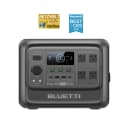
BLUETTI Elite 100 V2
1,024 Wh battery
Check price at BLUETTIPaid link
- 3
Best for multi-day outages
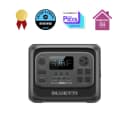
BLUETTI Elite 300
3,014 Wh battery
Check price at BLUETTIPaid link
A full-size refrigerator is an easy load for a modern power station. It draws about 150 W while the compressor runs, and the compressor runs about a third of the time, so the day-long average is about 52 W. The hard part is the first second, when the compressor starts and briefly pulls around 1,200 W.
That leaves two specs to check. Surge has to be at least 1,200 W, and realistically 2,000 W or more so a freezer or furnace blower can start on top of it. Capacity sets how long you get. Multiply the published Wh by 0.85 for inverter losses and divide by 52 W, and a 1,024 Wh unit comes out at about 16 hours, a 2,048 Wh unit at about 33 and a 3,014 Wh unit at about 49. A UPS switchover is nice to have, though a fridge does not care about a short gap.
For a half-day outage on a budget, the BLUETTI Elite 100 V2 at around $499 does the job. If your outages run two days, buy the BLUETTI Elite 300 at around $1,199.
Top picks, and why
Anker SOLIX C2000 Gen 2
- 2.0 kWh
- expands to 4 kWh
- 2,400 W continuous
2,048 Wh with a 2,400 W inverter and a 4,000 W surge, so the fridge, a chest freezer and a furnace blower can all start on it. At 41.7 lb it is the lightest in the 2 kWh class, and one extra battery takes it to 4,096 Wh. The math says about 33 hours of fridge.
- TT-30 RV outlet for a camper
- Expands to 4,096 Wh, about 2 days of fridge
- 10 ms UPS switchover
- Expansion tops out at 4 kWh
- Not split-phase, no 240V
About $900 at Anker SOLIX, checked Oct 13, 2026
Check price at Anker SOLIXPaid link. We earn a commission at no cost to you.
1,024Wh battery
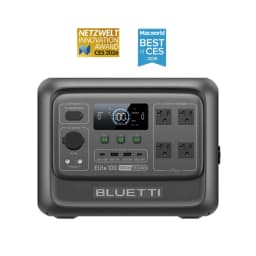
BLUETTI Elite 100 V2
- 1.0 kWh
- 1,800 W continuous
1,024 Wh, 1,800 W continuous, 3,600 W surge and 25.3 lb for around $499. Expect roughly 16 hours of fridge, or 10 hours of fridge plus chest freezer. A 1,000 W solar input is unusual at this price, which makes it the best small unit to pair with panels.
- 1,000 W solar input, tied for highest of the 1 kWh class
- 1,800 W inverter runs a coffee maker or microwave
- 10 ms UPS switchover
- Four AC outlets, fewer than the six-outlet 1 kWh units
- Not split-phase, no 240V
About $499 at BLUETTI, checked Oct 10, 2026
Check price at BLUETTIPaid link. We earn a commission at no cost to you.
3,014Wh battery
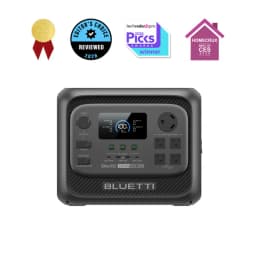
BLUETTI Elite 300
- 3.0 kWh
- 2,400 W continuous
3,014 Wh for around $1,199 is the cheapest route to two full days of refrigerator, about 49 hours by our math. It has 2,400 W continuous, a 4,800 W surge and a 10 ms UPS. There is no expansion port, so buy it for outages that end in two or three days. A week is beyond it.
- 3,014 Wh, about 49 hours of fridge
- 2,400 W inverter runs a microwave or coffee maker
- 10 ms UPS switchover
- Not split-phase, no 240V
About $1,199 at BLUETTI, checked Oct 10, 2026
Check price at BLUETTIPaid link. We earn a commission at no cost to you.
Will it run your stuff?
Tick what you need to keep running. Every pick below re-sorts by how long it lasts on one charge.
Average draw about 104 W, peak about 1,251 W when the biggest motor starts.
- Check price at Anker SOLIX
Anker SOLIX F3800 Plus
3,840 Wh, About $2,400 at Anker SOLIX
about 32 hours
Paid link
- Check price at BLUETTI
BLUETTI Elite 300
3,014 Wh, About $1,199 at BLUETTI
about 25 hours
Paid link
- Check price at BLUETTI
BLUETTI Elite 200 V2
2,074 Wh, About $899 at BLUETTI
about 17 hours
Paid link
- Check price at Anker SOLIX
Anker SOLIX C2000 Gen 2
2,048 Wh, About $900 at Anker SOLIX
about 17 hours
Paid link
- Check price on Amazon
EcoFlow DELTA 2 Max
2,048 Wh, $500 to $1,000
about 17 hours
Paid link
- Check price on Amazon
Jackery Explorer 2000 Plus
2,042 Wh, $1,000 to $2,000
about 17 hours
Paid link
- Check price on Amazon
Jackery Explorer 1000 v2
1,070 Wh, $250 to $500
about 9 hours
Paid link
- Check price at BLUETTI
BLUETTI Elite 100 V2
1,024 Wh, About $499 at BLUETTI
about 8.5 hours
Paid link
- Check price on Amazon
EcoFlow DELTA 3
1,024 Wh, $500 to $1,000
about 8.5 hours
Paid link
- Check price on Amazon
EcoFlow DELTA 3 Plus
1,024 Wh, $500 to $1,000
about 8.5 hours
Paid link
Runtime = capacity x 0.85 inverter efficiency / average draw, with fridges and freezers cycling on their compressors. Amazon links are paid links. Amazon prices change, so we show a range.
Compare every pick
Paid links: we earn a commission if you buy, at no cost to you. Amazon prices change often, so we show a range and link to the live price.
Hours of fridge by capacity
Our power station sizer assumes a 150 W fridge at a 35 percent duty cycle. That is 52.5 W averaged over a day, or about 1,260 Wh per 24 hours. With 15 percent lost in the inverter, a 1,024 Wh unit delivers about 870 Wh and runs the fridge about 16 hours. A 2,048 Wh unit gives about 33 hours and a 3,014 Wh unit about 49 hours. The 4,096 Wh EcoFlow DELTA Pro 3 reaches about 66 hours, but by then you are paying for 240V output you may not need.
Newer ENERGY STAR refrigerators often average under 40 W, which stretches every figure above by 25 percent or more. Older side-by-sides with ice makers can average 80 W and cut them by a third. For a real number, plug your fridge into a watt-meter for a day before you buy. Otherwise the sizer's defaults are a safe middle.
A fridge that stays closed holds temperature for several hours without power. There is no rush to plug it into the battery the moment the lights go out. Do it when you notice, and the hours above start from that point.
Surge is the spec that rejects units
A compressor is an induction motor, and it needs a burst of current to start. Our appliance table puts a full-size fridge at 1,200 W starting and a chest freezer at 900 W. Every unit in this guide has a 3,000 W surge or better, so the fridge alone will always start. The question is what else is plugged in when the compressor kicks on. If two motors start at once, a fridge, freezer and 600 W furnace blower together can momentarily ask for about 2,400 W. That is why we treat 3,000 W as the floor and prefer 4,000 W.
Continuous wattage matters less than people think. A fridge at 150 W plus a freezer at 100 W plus lights, router and phone chargers stays under 500 W steady. The continuous rating bites in the kitchen. Run a microwave or coffee maker on top of the fridge and you are at 1,500 W, which puts the 1,500 W Jackery Explorer 1000 v2 at its limit while the 1,800 W to 2,600 W units have headroom.
The picks in detail
The 1 kWh class is the cheapest and buys roughly 16 hours of fridge. Step up to the 2 kWh class and you get a full day plus a margin, and most of those accept expansion batteries. The 3 kWh Elite 300 at $1,199 is the only unit that reaches two days in one box under $1,500. Choose the class by how long your outages usually last, then choose the unit by weight and solar input.
Jackery Explorer 1000 v2
- 1.1 kWh
- 1,500 W continuous
1,070 Wh at 23.8 lb for $250 to $500, with a 3,000 W surge. Its 1,500 W continuous rating is the lowest here, so keep the microwave off it. About 17 hours of fridge.
- Lightest 1 kWh class unit in our list at 23.8 lb
- About 17 hours of a full-size fridge per charge
- 1,500 W inverter runs a coffee maker or small microwave
- 400 W solar input, lowest of the 1 kWh class
- Three AC outlets
$250 to $500, live price on Amazon
Check price on AmazonPaid link. We earn a commission at no cost to you.
EcoFlow DELTA 3
- 1.0 kWh
- expands to 5 kWh
- 1,800 W continuous
1,024 Wh, 1,800 W, 3,600 W surge, six AC outlets and a 10 ms UPS at $500 to $1,000. It expands to 5 kWh later, which makes it the 1 kWh unit to buy if you plan to add capacity instead of replacing the whole thing.
- Six AC outlets and a 1,800 W inverter
- Expands to 5 kWh, about 2 days of fridge
- 10 ms UPS switchover
- 500 W solar input, half the DELTA 3 Plus
- Not split-phase, no 240V
$500 to $1,000, live price on Amazon
Check price on AmazonPaid link. We earn a commission at no cost to you.
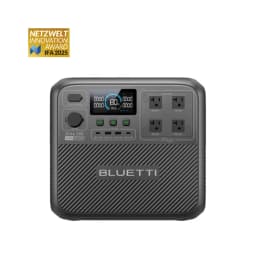
2,074Wh battery
BLUETTI Elite 200 V2
- 2.1 kWh
- 2,600 W continuous
2,074 Wh and a 2,600 W inverter at 53.4 lb for around $899. It is rated for 6,000 cycles and has a 10 ms UPS and 1,000 W of solar input. With no expansion port, size it right the first time.
- Rated for 6,000 cycles
- 2,600 W inverter and 10 ms UPS switchover
- About 34 hours of a full-size fridge per charge
- Not expandable
- Over 50 lb at 53.4 lb
About $899 at BLUETTI, checked Oct 10, 2026
Check price at BLUETTIPaid link. We earn a commission at no cost to you.
EcoFlow DELTA 2 Max
- 2.0 kWh
- expands to 6 kWh
- 2,400 W continuous
2,048 Wh, 2,400 W and a 4,800 W surge at $500 to $1,000, and it is often discounted. Two extra batteries take it to 6,144 Wh total. At 50.7 lb it is heavier than the Anker C2000 Gen 2, but it takes 1,000 W of solar input.
- Expands to 6,144 Wh, about 3 days of fridge
- 2,400 W inverter and six AC outlets
- 1,000 W solar input
- Over 50 lb at 50.7 lb
- 20 ms switchover, slower than the DELTA 3 line
$500 to $1,000, live price on Amazon
Check price on AmazonPaid link. We earn a commission at no cost to you.
Solar recharge: what panels actually put back
A fridge uses about 1,260 Wh a day. Panels rarely deliver their nameplate, so plan on 70 percent of rating for about four peak-sun hours. At that rate 400 W of panels puts back roughly 1,100 Wh on a decent day and 600 W puts back about 1,700 Wh. In good weather, 400 W keeps a fridge going indefinitely with the battery covering the night. Going to 600 W adds the freezer and lights.
What limits this is the unit's solar input. The Jackery Explorer 1000 v2 and 2000 v2 cap at 400 W. The BLUETTI Elite 100 V2, Elite 200 V2 and EcoFlow DELTA 2 Max accept 1,000 W, the DELTA 3 Plus accepts 1,000 W across two inputs, and the Jackery Explorer 2000 Plus accepts 1,400 W. Planning to run on sun for more than a day? Shop for input wattage as hard as you shop for capacity.
EcoFlow DELTA 3 Plus
- 1.0 kWh
- expands to 5 kWh
- 1,800 W continuous
Same 1,024 Wh and 3,600 W surge as the DELTA 3, plus dual inputs totaling 1,000 W of solar, for $500 to $1,000. It expands to 5 kWh. Get this one if you will actually set panels out.
- 1,000 W solar input, double the DELTA 3
- Expands to 5 kWh, about 2 days of fridge
- Six AC outlets and 10 ms UPS switchover
- 1,024 Wh base, about 17 hours of fridge before expansion
- Not split-phase, no 240V
$500 to $1,000, live price on Amazon
Check price on AmazonPaid link. We earn a commission at no cost to you.
Jackery Explorer 2000 Plus
- 2.0 kWh
- expands to 12 kWh
- 3,000 W continuous
2,042 Wh with a 3,000 W inverter, 6,000 W surge and 1,400 W of solar input for $1,000 to $2,000. Battery packs take it to 12 kWh, so if you keep adding it becomes a week-long fridge system.
- Expands to 12 kWh, about 7 days of fridge
- 3,000 W inverter with 6,000 W surge
- 1,400 W solar input for faster panel recharging
- Over 60 lb at 61.5 lb
- Not split-phase, no 240V
$1,000 to $2,000, live price on Amazon
Check price on AmazonPaid link. We earn a commission at no cost to you.
Chest freezers and the second fridge
A chest freezer is easier than a fridge. It runs at about 100 W with a 900 W start and a 30 percent duty cycle, which averages about 30 W and 720 Wh a day. A full chest freezer that stays shut can go 48 hours without power, so it is also the load you can rotate. Run the fridge for a few hours, then move the plug to the freezer for an hour. Together the two average about 82 W, which gives a 1,024 Wh unit about 10 hours and a 2,048 Wh unit about 21 hours.
If the power station is not next to the appliance, use a 12-gauge outdoor extension cord and keep the run under 50 ft so the compressor sees full voltage at start. Thin 16-gauge cords are the most common reason a fridge trips a power station's overload protection.
When a generator or home battery is the better buy
Once your outages routinely last three days or more, a power station stops making sense around the 3 kWh mark. A Westinghouse iGen2550DFc dual fuel inverter generator costs $500 to $1,000 and runs about 11 hours at quarter load on 1.1 gallons of gasoline. It will keep the fridge, freezer, furnace blower and lights going for as long as you have fuel. You give up silence and indoor use in exchange for unlimited runtime. The dual fuel inverter guide covers the quiet options.
To cover the fridge, furnace and well pump automatically with no fuel at all, step up to a 240V home battery. The Anker SOLIX F3800 Plus at about $2,400 has 3,840 Wh, 6,000 W and real 240V output, and it takes up to six expansion batteries. It is heavy and costs far more than the Elite 300. It is also where a battery starts to replace a generator instead of backing one up. The home battery guide compares the no-install options.
Westinghouse iGen2550DFc Dual Fuel Inverter
- 1,900 W running
- 2,550 W starting
- gasoline / propane
- inverter
+1 moreFewer
- 52 dBA
1,900 W on gas or 1,700 W on propane, 52 dBA, 43 lb, with a CO sensor and 11 hours at quarter load per tank. At $500 to $1,000 it costs less than any 1 kWh power station and keeps running as long as you have fuel.
- Runs a fridge, furnace blower and lights
- Dual fuel: gas or propane
- CO sensor and a 52 dBA noise level
- 1,700 W on propane, less than on gas
- Pull start only, no 240V outlet
$500 to $1,000, live price on Amazon
Check price on AmazonPaid link. We earn a commission at no cost to you.
Anker SOLIX F3800 Plus
- 3.8 kWh
- expands to 27 kWh
- 6,000 W continuous
- 120/240V
3,840 Wh, 6,000 W and 120/240V output for about $2,400, expandable to 26.9 kWh. The base unit gives about 66 hours of fridge, and it can carry the well pump and dryer that no 120V power station can.
- 120/240V split phase, so it can run 240V loads like a well pump
- 9,000 W surge covers a 1/2 HP well pump start
- 3,200 W solar input, more than the original F3800 (2,400 W)
- 137 lb, plan to keep it in one place
- 20 ms switchover, slower than the 0 ms Jackery Explorer 5000 Plus
About $2,400 at Anker SOLIX, checked Oct 13, 2026
Check price at Anker SOLIXPaid link. We earn a commission at no cost to you.
The bottom line
From published specs and our sizing rules. Not lab tested.
- 1
Best overall
Anker SOLIX C2000 Gen 2
2,048 Wh battery
Check price at Anker SOLIXPaid link
- 2
Budget pick
BLUETTI Elite 100 V2
1,024 Wh battery
Check price at BLUETTIPaid link
- 3
Best for multi-day outages
BLUETTI Elite 300
3,014 Wh battery
Check price at BLUETTIPaid link
Frequently asked questions
How long will a 1,000 Wh power station run a refrigerator?
About 16 hours for a full-size fridge averaging 52 W, after inverter losses. An efficient newer fridge averaging 40 W gets about 21 hours.
How many watts does a refrigerator need to start?
About 1,200 W for a full-size fridge and about 900 W for a chest freezer, for under a second. Every unit in this guide has at least a 3,000 W surge rating, so one compressor always starts. The trouble comes from two motors starting at once on a small unit.
Will a 2,000 Wh power station run a fridge for a full day?
Yes. A 2,048 Wh unit runs a 52 W average fridge about 33 hours, or a fridge plus chest freezer about 21 hours.
Can a power station run a fridge and freezer at the same time?
Yes on any unit here. The two together average about 82 W, with worst-case starting around 2,100 W if both compressors kick on at once. A 1,024 Wh unit gives about 10 hours, a 3,014 Wh unit about 31 hours.
How much solar do I need to keep a fridge running?
About 400 W of panels. A fridge uses about 1,260 Wh a day, and 400 W of panels at 70 percent of rating over four sun hours returns about 1,100 Wh. Go to 600 W if you want the freezer covered too.
Do I need a UPS mode to back up a refrigerator?
No. A closed fridge holds temperature for hours, so a gap of minutes does not matter. UPS mode only helps if you want the unit plugged in permanently and never want to think about it.
Is a power station or a generator cheaper for fridge backup?
A 1 kWh power station such as the Jackery Explorer 1000 v2 is $250 to $500, and a 2,500 W dual fuel inverter generator such as the Westinghouse iGen2550DFc is $500 to $1,000. For outages over two days the generator wins on runtime. The power station wins on silence, indoor use and zero fuel storage.
How much does it cost to run a refrigerator?
About $80 a year for a typical full-size fridge. At a 52 W average it uses about 1.26 kWh a day or 460 kWh a year, and 460 kWh x 17.3 cents (the US average rate) is about $80, or about 22 cents a day. A newer ENERGY STAR model averaging 40 W costs closer to $60.
How long does food stay safe in a fridge without power?
About 4 hours if the door stays closed, per USDA food safety guidance. A full freezer holds about 48 hours and a half-full one about 24. Throw out perishables that sat above 40 F for more than 2 hours, so plug the fridge into a power station within the first few hours of an outage.
Can I use an extension cord between a power station and a fridge?
Yes, if it is heavy enough. Use a 12-gauge cord and keep the run under 50 ft so the compressor gets full voltage when it starts. Thin 16-gauge cords are the most common reason a fridge trips a power station's overload protection.
11 products are linked on this page. We have not lab-tested these products; picks are based on published specifications and our sizing rules. Amazon prices change, so we show a range and link to the live price. See our disclosure.
Size it for your home
Marcus Reed
Founder and Editor, CrunchYourDollars
Marcus Reed builds the sizing tools on CrunchYourDollars. He is a software engineer with a long-running PC hardware and power supply habit, which is where the watts, watt-hours and surge math on this site comes from. Product specs are pulled from manufacturer data sheets, electricity rates from the U.S. Energy Information Administration, and water chemistry rules from the Water Quality Association. He is not a licensed electrician or plumber: the tools show the math and the matching models so you can make the call, and anything involving your electrical panel should be checked by a licensed pro.
More about CrunchYourDollars and how we researchGet notified when we add tools
An occasional email when a new sizing tool goes live or the product database is refreshed. No spam, unsubscribe anytime.