A solar generator is a battery power station plus solar panels. It is silent, safe indoors and needs no fuel. For most homes the best one is the Anker SOLIX F3800 Plus at about $2,400. It gives 3,840 Wh, 6,000 W and 120/240V from one box, takes 3,200 W of solar and expands to 26,880 Wh.
Our picks at a glance
From published specs and our sizing rules. Not lab tested.
- 1
Best overall
Anker SOLIX F3800 Plus
3,840 Wh battery
Check price at Anker SOLIXPaid link
- 2
Best for a fridge and essentials
EcoFlow DELTA 2 Max
2,048 Wh battery
Check price on AmazonPaid link
- 3
Best for days on solar
EcoFlow DELTA Pro 3
4,096 Wh battery
Check price on AmazonPaid link
- 4
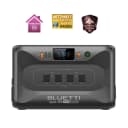
Cheapest 240V
BLUETTI Apex 300
2,765 Wh battery
Check price at BLUETTIPaid link
If you only need the fridge, router and lights, the EcoFlow DELTA 2 Max ($500 to $1,000) does it with 2,048 Wh and 1,000 W of solar input. To keep essentials going for days on sunshine alone, step up to the EcoFlow DELTA Pro 3, which pairs 4,096 Wh with 2,600 W of solar input.
Two numbers decide the purchase. Battery Wh sets how long you last without sun, and solar input watts set how much you get back each day. Our home battery backup sizer works out the Wh for your appliances. The math below shows whether the panels can keep up.
Top picks, and why
Anker SOLIX F3800 Plus
- 3.8 kWh
- expands to 27 kWh
- 6,000 W continuous
- 120/240V
3,840 Wh, 6,000 W continuous and 9,000 W surge at 120/240V, so it runs a well pump, furnace and fridge from one unit. Its 3,200 W solar input can put back about 9,600 Wh on a 4 sun-hour day. It sells for about $2,400 and grows to 26,880 Wh with BP3800 packs.
- 120/240V split phase, so it can run 240V loads like a well pump
- 9,000 W surge covers a 1/2 HP well pump start
- 3,200 W solar input, more than the original F3800 (2,400 W)
- 137 lb, plan to keep it in one place
- 20 ms switchover, slower than the 0 ms Jackery Explorer 5000 Plus
About $2,400 at Anker SOLIX, checked Oct 13, 2026
Check price at Anker SOLIXPaid link. We earn a commission at no cost to you.
EcoFlow DELTA 2 Max
- 2.0 kWh
- expands to 6 kWh
- 2,400 W continuous
2,048 Wh and 2,400 W with 1,000 W of solar input, enough to refill the battery in one good day of sun. Two extra batteries take it to 6,144 Wh later. At $500 to $1,000 it is one of the cheapest expandable 2 kWh units in our database.
- Expands to 6,144 Wh, about 3 days of fridge
- 2,400 W inverter and six AC outlets
- 1,000 W solar input
- Over 50 lb at 50.7 lb
- 20 ms switchover, slower than the DELTA 3 line
$500 to $1,000, live price on Amazon
Check price on AmazonPaid link. We earn a commission at no cost to you.
EcoFlow DELTA Pro 3
- 4.1 kWh
- expands to 12 kWh
- 4,000 W continuous
- 120/240V
4,096 Wh, 4,000 W continuous and 120/240V, with 2,600 W of solar input. That input can recover about 7,800 Wh on a 4 sun-hour day, more than a typical 5 kWh essentials load. It sells for over $2,000 and expands to 12,000 Wh.
- 120/240V split-phase output
- Home panel compatible
- 2,600 W solar input, highest in our list
- Over 100 lb at 113.5 lb
Over $2,000, live price on Amazon
Check price on AmazonPaid link. We earn a commission at no cost to you.
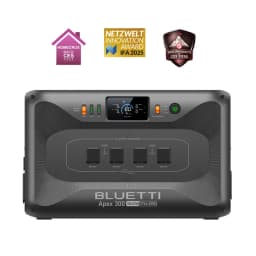
2,765Wh battery
BLUETTI Apex 300
- 2.8 kWh
- expands to 19 kWh
- 3,840 W continuous
- 120/240V
2,765 Wh and 3,840 W at 120/240V with 2,400 W of solar input and a 10 ms UPS switchover. It is the lowest price for split-phase power in our database. Around $1,599, with B300K packs taking it to 19,354 Wh.
- 120V and 240V output, can run a 240V well pump
- 84 lb, the lightest 240V unit in this list
- Expands to 19.4 kWh with up to six B300K packs
- 3,840 W continuous, the lowest of the 240V units here
- 2.8 kWh base, the smallest starting capacity with 240V
About $1,599 at BLUETTI, checked Oct 10, 2026
Check price at BLUETTIPaid link. We earn a commission at no cost to you.
Will it run your stuff?
Tick what you need to keep running. Every pick below re-sorts by how long it lasts on one charge.
Average draw about 104 W, peak about 1,251 W when the biggest motor starts.
- Check price on Amazon
EcoFlow DELTA Pro Ultra
6,144 Wh, Over $2,000
about 2 days
Paid link
- Check price on Amazon
Jackery Explorer 5000 Plus
5,040 Wh, Over $2,000
about 41 hours
Paid link
- Check price on Amazon
EcoFlow DELTA Pro 3
4,096 Wh, Over $2,000
about 34 hours
Paid link
- Check price at Anker SOLIX
Anker SOLIX F3800 Plus
3,840 Wh, About $2,400 at Anker SOLIX
about 32 hours
Paid link
- Check price at BLUETTI
BLUETTI Apex 300
2,765 Wh, About $1,599 at BLUETTI
about 23 hours
Paid link
- Check price at BLUETTI
BLUETTI Elite 200 V2
2,074 Wh, About $899 at BLUETTI
about 17 hours
Paid link
- Check price on Amazon
EcoFlow DELTA 2 Max
2,048 Wh, $500 to $1,000
about 17 hours
Paid link
- Check price at Anker SOLIX
Anker SOLIX C2000 Gen 2
2,048 Wh, About $900 at Anker SOLIX
about 17 hours
Paid link
- Check price at BLUETTI
BLUETTI AC200L
2,048 Wh, About $899 at BLUETTI
about 17 hours
Paid link
- Check price on Amazon
Jackery Explorer 2000 Plus
2,042 Wh, $1,000 to $2,000
about 17 hours
Paid link
Runtime = capacity x 0.85 inverter efficiency / average draw, with fridges and freezers cycling on their compressors. Amazon links are paid links. Amazon prices change, so we show a range.
Compare every pick
Paid links: we earn a commission if you buy, at no cost to you. Amazon prices change often, so we show a range and link to the live price.
The solar math in one line
Hours of full sun x panel watts x 0.75 = Wh you get back per day. The 0.75 covers heat, angle, dust and charge losses. Compare that to what you use in a day and you know whether the battery holds steady or drains.
Take a fridge at about 1,500 Wh a day, a router at 240 Wh, LED lights at 250 Wh and phones at 100 Wh. That is about 2,100 Wh a day. With 800 W of panels and 4 hours of full sun you get back 800 x 4 x 0.75 = 2,400 Wh. That covers it.
Winter is where it fails. At 2.5 sun hours the same 800 W of panels returns 1,500 Wh, so you lose about 600 Wh a day and a 2 kWh battery is flat in three to four days. Buy more panel watts than the summer math says, up to the station's solar input limit.
A 400 W panel is about 20 sq ft. Eight of them, 3,200 W, cover about the footprint of a parking space. Panels are sold separately. Match their voltage to the input range on your station's spec sheet.
Tier 1, fridge and essentials (about 2 kWh)
This tier keeps the food cold and the Wi-Fi on. A 2 kWh battery runs a typical fridge plus a router and lights for about a day with no sun, and 800 to 1,000 W of panels refill it on a clear day.
These units are 120V only. They cannot run a well pump, central furnace on a 240V circuit or anything hardwired. Pick by solar input and whether you want to expand later.
EcoFlow DELTA 2 Max
- 2.0 kWh
- expands to 6 kWh
- 2,400 W continuous
2,048 Wh, 2,400 W and 1,000 W of solar input, which returns about 3,000 Wh on a 4 sun-hour day. It expands to 6,144 Wh, so it can grow into tier 2. It sells for $500 to $1,000.
- Expands to 6,144 Wh, about 3 days of fridge
- 2,400 W inverter and six AC outlets
- 1,000 W solar input
- Over 50 lb at 50.7 lb
- 20 ms switchover, slower than the DELTA 3 line
$500 to $1,000, live price on Amazon
Check price on AmazonPaid link. We earn a commission at no cost to you.
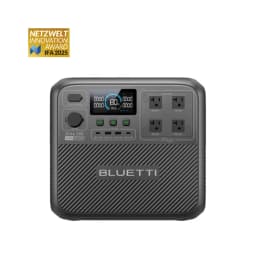
2,074Wh battery
BLUETTI Elite 200 V2
- 2.1 kWh
- 2,600 W continuous
2,074 Wh, 2,600 W continuous and 3,900 W surge with 1,000 W of solar input, rated for 6,000 cycles. It does not expand, so buy it if 2 kWh is all you will ever need. Around $899.
- Rated for 6,000 cycles
- 2,600 W inverter and 10 ms UPS switchover
- About 34 hours of a full-size fridge per charge
- Not expandable
- Over 50 lb at 53.4 lb
About $899 at BLUETTI, checked Oct 10, 2026
Check price at BLUETTIPaid link. We earn a commission at no cost to you.
Anker SOLIX C2000 Gen 2
- 2.0 kWh
- expands to 4 kWh
- 2,400 W continuous
2,048 Wh and 2,400 W at 41.7 lb, the lightest expandable 2 kWh unit in our database. Solar input is 800 W, about 2,400 Wh back on a 4 sun-hour day, and it expands to 4,096 Wh. It sells for about $900.
- TT-30 RV outlet for a camper
- Expands to 4,096 Wh, about 2 days of fridge
- 10 ms UPS switchover
- Expansion tops out at 4 kWh
- Not split-phase, no 240V
About $900 at Anker SOLIX, checked Oct 13, 2026
Check price at Anker SOLIXPaid link. We earn a commission at no cost to you.
Tier 2, essentials for days with solar recharge (3.5 to 5 kWh)
This is the tier for a house that wants the fridge, a chest freezer, the furnace blower, lights and internet through a multi-day outage. That load runs about 5 kWh a day. To hold steady on solar you need roughly 1,600 to 2,000 W of panels, since 1,600 x 4 x 0.75 = 4,800 Wh.
Compare solar input first in this tier. A unit that takes 2,600 W of panels can outrun a 5 kWh day, while one capped at 1,200 W falls behind every day without full sun.
EcoFlow DELTA Pro 3
- 4.1 kWh
- expands to 12 kWh
- 4,000 W continuous
- 120/240V
4,096 Wh, 4,000 W continuous, 8,000 W surge and 120/240V output, with 2,600 W of solar input. It is the only unit in this tier that also runs a 240V well pump. It sells for over $2,000 and expands to 12,000 Wh.
- 120/240V split-phase output
- Home panel compatible
- 2,600 W solar input, highest in our list
- Over 100 lb at 113.5 lb
Over $2,000, live price on Amazon
Check price on AmazonPaid link. We earn a commission at no cost to you.
Jackery Explorer 2000 Plus
- 2.0 kWh
- expands to 12 kWh
- 3,000 W continuous
2,042 Wh and 3,000 W with 1,400 W of solar input, about 4,200 Wh back on a 4 sun-hour day. Add one 2,042 Wh pack to reach this tier, and keep going to 12,000 Wh. The base unit sells for $1,000 to $2,000.
- Expands to 12 kWh, about 7 days of fridge
- 3,000 W inverter with 6,000 W surge
- 1,400 W solar input for faster panel recharging
- Over 60 lb at 61.5 lb
- Not split-phase, no 240V
$1,000 to $2,000, live price on Amazon
Check price on AmazonPaid link. We earn a commission at no cost to you.
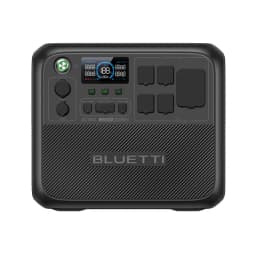
2,048Wh battery
BLUETTI AC200L
- 2.0 kWh
- expands to 8 kWh
- 2,400 W continuous
2,048 Wh and 2,400 W with 1,200 W of solar input and expansion to 8,192 Wh. One expansion battery puts it at 4,096 Wh. Around $899, the lowest entry price for a unit that grows past 8 kWh.
- 30 A RV outlet for a camper
- Expands to 8,192 Wh, about 4 days of fridge
- 1,200 W solar input
- Over 60 lb at 62.4 lb
- Not split-phase, no 240V
About $899 at BLUETTI, checked Oct 10, 2026
Check price at BLUETTIPaid link. We earn a commission at no cost to you.
Tier 3, whole-home 240V
To power the house rather than a few cords, you need 120/240V split phase and a way into the panel, either a transfer switch or the maker's smart panel. A licensed electrician installs either one. With that in place these run the well pump, furnace, fridge, lights and outlets on the backed-up circuits.
A whole-home essentials load with a well pump runs about 8 to 10 kWh a day. The F3800 Plus at 3,200 W of panels returns about 9,600 Wh on a 4 sun-hour day. The DELTA Pro Ultra at its 5,600 W maximum returns about 16,800 Wh. Central air needs a 12,000 W class inverter like the EcoFlow DELTA Pro Ultra X, so run the home battery backup sizer if AC is on your list.
Anker SOLIX F3800 Plus
- 3.8 kWh
- expands to 27 kWh
- 6,000 W continuous
- 120/240V
3,840 Wh, 6,000 W and 9,000 W surge at 120/240V, 3,200 W of solar input, expandable to 26,880 Wh. It sells for about $2,400, and its 6,000 W of split-phase power is the strongest inverter you can get at that price here.
- 120/240V split phase, so it can run 240V loads like a well pump
- 9,000 W surge covers a 1/2 HP well pump start
- 3,200 W solar input, more than the original F3800 (2,400 W)
- 137 lb, plan to keep it in one place
- 20 ms switchover, slower than the 0 ms Jackery Explorer 5000 Plus
About $2,400 at Anker SOLIX, checked Oct 13, 2026
Check price at Anker SOLIXPaid link. We earn a commission at no cost to you.
EcoFlow DELTA Pro Ultra
- 6.1 kWh
- expands to 31 kWh
- 7,200 W continuous
- 120/240V
6,144 Wh and 7,200 W at 120/240V with 5,600 W of solar input, the most of the four here. Extra batteries are 6,144 Wh each, up to 30,720 Wh per inverter. At over $2,000, it is the pick for long outages powered by a large array.
- 7,200 W at 120/240V, can run 240V loads like a well pump
- Expands to 30.7 kWh with five extra batteries
- 5,600 W solar input, more than any Anker or BLUETTI unit here
- 164 lb with one battery, heavy to move
- 6 AC outlets vs 8 on the Anker F3800 models
Over $2,000, live price on Amazon
Check price on AmazonPaid link. We earn a commission at no cost to you.
Jackery Explorer 5000 Plus
- 5.0 kWh
- expands to 30 kWh
- 7,200 W continuous
- 120/240V
5,040 Wh, 7,200 W and 14,400 W surge at 120/240V, with 4,000 W of solar input and a 0 ms UPS mode. The surge rating is the highest here, which helps with a well pump and a big compressor starting together. It sells for over $2,000.
- 0 ms UPS mode, the fastest switchover here
- 7,200 W at 120/240V with a 14,400 W surge
- Pairs with Jackery's 60 A smart transfer switch
- 132 lb, plan to keep it in one place
Over $2,000, live price on Amazon
Check price on AmazonPaid link. We earn a commission at no cost to you.
2,765Wh battery
BLUETTI Apex 300
- 2.8 kWh
- expands to 19 kWh
- 3,840 W continuous
- 120/240V
2,765 Wh and 3,840 W at 120/240V with 2,400 W of solar input, about 7,200 Wh back on a 4 sun-hour day. It runs one 240V pump at a time. Around $1,599, and B300K packs add 2,765 Wh each.
- 120V and 240V output, can run a 240V well pump
- 84 lb, the lightest 240V unit in this list
- Expands to 19.4 kWh with up to six B300K packs
- 3,840 W continuous, the lowest of the 240V units here
- 2.8 kWh base, the smallest starting capacity with 240V
About $1,599 at BLUETTI, checked Oct 10, 2026
Check price at BLUETTIPaid link. We earn a commission at no cost to you.
Add batteries and a panel connection
One base unit rarely covers a full night of whole-home essentials. Plan on one or two expansion batteries. The panel connection is what turns a big power station into home backup instead of a box of outlets.
Anker SOLIX BP3800 Expansion Battery
- 3.8 kWh
Adds 3,840 Wh, up to six per station. One pack doubles the F3800 Plus to 7,680 Wh, enough for most homes to get through a night. It sells for about $1,800.
- Adds 3.84 kWh, over two days of a full-size fridge alone
- Fits both the F3800 and F3800 Plus
- Six packs take a station to 26.9 kWh
- Max six per station
About $1,800 at Anker SOLIX, checked Oct 13, 2026
Check price at Anker SOLIXPaid link. We earn a commission at no cost to you.
EcoFlow DELTA Pro Ultra Extra Battery
- 6.1 kWh
Adds 6,144 Wh for $1,000 to $2,000, about $293 per kWh, the lowest cost per kWh of any pack here. Up to five per inverter.
- Adds 6.1 kWh, the largest add-on pack in this list
- Over three and a half days of a full-size fridge alone
- Up to five per inverter for 30.7 kWh total
- 112 lb per battery
$1,000 to $2,000, live price on Amazon
Check price on AmazonPaid link. We earn a commission at no cost to you.
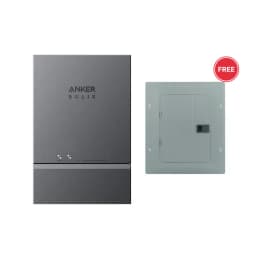
Anker SOLIX Smart Home Power Kit (Home Power Panel)
Smart panel, subpanel and breakers for the F3800 family that move your chosen circuits to battery automatically with 20 ms switchover. Around $1,200, electrician installed.
- Switches your chosen circuits to battery automatically
- 20 ms switchover on backed-up circuits
- Smart panel, subpanel and breakers in one kit
- Built for the F3800 family of stations
- Panel work, plan on a licensed electrician
About $1,200 at Anker SOLIX, checked Oct 13, 2026
Check price at Anker SOLIXPaid link. We earn a commission at no cost to you.
EcoFlow Smart Home Panel 2
12-circuit smart subpanel with 20 ms switchover for the DELTA Pro Ultra or DELTA Pro 3. It sells for $1,000 to $2,000 and is electrician installed.
- 12 circuits switch to battery automatically
- 20 ms switchover
- Works with DELTA Pro Ultra or DELTA Pro 3
- One battery family at a time, not both
- Panel work, plan on a licensed electrician
$1,000 to $2,000, live price on Amazon
Check price on AmazonPaid link. We earn a commission at no cost to you.
Solar generator vs gas generator
Gas wins on raw power per dollar and on long cloudy outages. Solar wins on noise, safety and fuel. For a well-pump house in a storm-prone area, the best setup is often a battery for nights plus a small generator for gray weeks.
Noise and fumes. A power station makes fan noise only and can sit in the kitchen. A gas generator runs 52 to 78 dBA and must sit outdoors, 20 ft or more from windows and doors.
Fuel. A 7,500 W open-frame generator burns about 0.6 gallons an hour at quarter load, so three days takes about 43 gallons of gas that goes stale in months. A solar generator needs only sun, and gives back nothing on a dark day.
Upfront cost. The Westinghouse WGen9500DF makes 9,500 W for $500 to $1,000. The F3800 Plus with two BP3800 packs is 11,520 Wh and 6,000 W for about $6,000 before panels. Per day of use it flips, since gas costs about $16 to $82 a day to run and sunshine costs nothing.
Multi-day outages. After a summer hurricane the sun is usually out and a big array keeps up. In a week-long ice storm, panels may return a fraction of their rating and a generator is what keeps the house warm.
Which one to buy
For an apartment, a condo or a house on city water with gas heat and outages under two days, get a 2 kWh unit like the EcoFlow DELTA 2 Max and 800 to 1,000 W of panels.
If you want essentials for days and have no safe spot 20 ft from windows, or neighbors close by, get the EcoFlow DELTA Pro 3 or a Jackery Explorer 2000 Plus with a pack, and 1,600 W or more of panels.
On a well, or if you want circuits switched automatically, get the Anker SOLIX F3800 Plus with one BP3800 and its Home Power Panel, or the BLUETTI Apex 300 if budget comes first.
For long winter outages, a big house and a tight budget, a gas or tri-fuel generator is the better buy. Our portable generator guide and the generator sizer pick the size.
The bottom line
From published specs and our sizing rules. Not lab tested.
- 1
Best overall
Anker SOLIX F3800 Plus
3,840 Wh battery
Check price at Anker SOLIXPaid link
- 2
Best for a fridge and essentials
EcoFlow DELTA 2 Max
2,048 Wh battery
Check price on AmazonPaid link
- 3
Best for days on solar
EcoFlow DELTA Pro 3
4,096 Wh battery
Check price on AmazonPaid link
- 4
Cheapest 240V
BLUETTI Apex 300
2,765 Wh battery
Check price at BLUETTIPaid link
Frequently asked questions
Can a solar generator power a whole house?
Yes for essentials, if it has 120/240V output and is connected through a transfer switch or smart panel by an electrician. The Anker F3800 Plus, EcoFlow DELTA Pro Ultra, Jackery Explorer 5000 Plus and BLUETTI Apex 300 all do this. Central air needs a 12,000 W class unit like the DELTA Pro Ultra X.
Is a solar generator better than a gas generator?
It is better for noise, indoor use and fuel-free running, and worse for raw power per dollar and long cloudy outages. A 9,500 W gas generator such as the Westinghouse WGen9500DF costs $500 to $1,000, while a 6,000 W solar setup with storage for a full day starts above $4,000. Many households pair a battery with a small generator.
How many solar panels do I need to run a refrigerator?
About 800 W of panels covers a fridge, router and lights on a 4 sun-hour day. The math is 800 x 4 x 0.75 = 2,400 Wh back vs about 2,100 Wh used. In winter, plan on more.
How long will a solar generator run a refrigerator?
A 2 kWh unit runs a typical fridge for about a day with no sun. At about 1,500 Wh a day, the 2,074 Wh BLUETTI Elite 200 V2 lasts roughly 30 hours after inverter losses, and solar refills it during the day.
How long does it take to charge a solar generator with panels?
Divide battery Wh by panel watts x 0.75. A 4,096 Wh EcoFlow DELTA Pro 3 on 1,600 W of panels takes about 3.4 hours of full sun. On 2,600 W, its maximum, about 2.1 hours.
Can a solar generator run a well pump?
Only if it outputs 120/240V split phase, since most well pumps are 240V. The EcoFlow DELTA Pro 3 is the smallest unit here that does it, and the BLUETTI Apex 300 is the cheapest at around $1,599.
Can you use a solar generator indoors?
Yes. A battery power station has no exhaust, so it can sit inside while the panels stay outdoors. That is the biggest safety edge over a gas generator, which must run 20 ft or more from the house.
Do solar generators work on cloudy days?
They charge, but slowly. Heavy overcast can cut panel output to a small fraction of the rating, so size the battery to carry you through two or three gray days, or keep a generator as a backup.
What size solar generator do I need for home backup?
Size it by daily use. A fridge, router and lights use about 2,100 Wh a day, so a 2 kWh unit with 800 to 1,000 W of panels covers it. A fridge, chest freezer, furnace blower, lights and internet run about 5 kWh a day, which calls for 3.5 to 5 kWh of battery and 1,600 to 2,000 W of panels. Whole-home essentials with a well pump run about 8 to 10 kWh a day and need a 120/240V unit like the Anker F3800 Plus plus an expansion battery.
How many years does a solar generator battery last?
Well over 8 years for most owners. The LiFePO4 cells in these units are typically rated for about 3,000 to 4,000 full cycles before capacity drops to 80 percent, and the BLUETTI Elite 200 V2 is rated for 6,000. At one full cycle every day, 3,000 cycles is about 8 years, and a unit that only cycles during outages lasts far longer.
18 products are linked on this page. We have not lab-tested these products; picks are based on published specifications and our sizing rules. Amazon prices change, so we show a range and link to the live price. See our disclosure.
Size it for your home
Marcus Reed
Founder and Editor, CrunchYourDollars
Marcus Reed builds the sizing tools on CrunchYourDollars. He is a software engineer with a long-running PC hardware and power supply habit, which is where the watts, watt-hours and surge math on this site comes from. Product specs are pulled from manufacturer data sheets, electricity rates from the U.S. Energy Information Administration, and water chemistry rules from the Water Quality Association. He is not a licensed electrician or plumber: the tools show the math and the matching models so you can make the call, and anything involving your electrical panel should be checked by a licensed pro.
More about CrunchYourDollars and how we researchGet notified when we add tools
An occasional email when a new sizing tool goes live or the product database is refreshed. No spam, unsubscribe anytime.