Free calculator
Portable Power Station Sizer
Find the watt-hours and output you need for an outage, CPAP, camping or van, and see which models fit. Or flip to runtime mode and check how long a given station will run one appliance.
Updated Oct 16, 2026
- Answer a few questions
- See the math behind every number
- Get models that actually fit
Every power station this tool can recommend
Sorted by capacity, 250 Wh to 4,000 Wh.
EcoFlow RIVER 3 Plus
- 0.3 kWh
- expands to 1 kWh
- 600 W continuous
Light 286 Wh unit with a real 600 W inverter and a 10 ms UPS, so it can sit under a CPAP or router.
- 10 ms UPS switchover for a CPAP or router
- Add-on batteries reach 858 Wh, about 2 CPAP nights
- Three AC outlets at 10.4 lb
- 600 W inverter: no microwave or kettle
- 286 Wh alone is about 6 hours of CPAP
$250 to $500, live price on Amazon
Check price on AmazonPaid link. We earn a commission at no cost to you.
288Wh battery
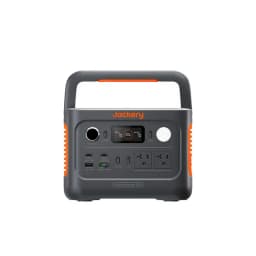
Jackery Explorer 300 v2
- 0.3 kWh
- 300 W continuous
Small LiFePO4 unit for a CPAP, phones and a laptop on a weekend trip.
- Lightest unit in our list at 8.3 lb
- About 6 hours of CPAP without humidifier
- 20 ms UPS switchover for a router or modem
- Only one AC outlet
- 300 W inverter: no coffee maker, microwave or kettle
288Wh battery
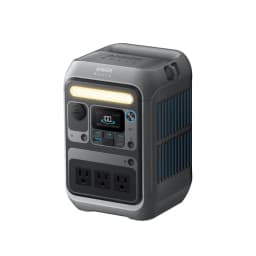
Anker SOLIX C300
- 0.3 kWh
- 300 W continuous
Compact 288 Wh unit with three AC outlets and 140 W USB-C. Often sold out on Anker's own store; check Amazon.
- 140 W USB-C port for a laptop
- Three AC outlets in a 9.3 lb box
- 10 ms UPS switchover
- 300 W inverter: no coffee maker, microwave or kettle
- 100 W solar input, slow to refill from panels
About $330 at Anker SOLIX, checked Oct 13, 2026
Check price at Anker SOLIXPaid link. We earn a commission at no cost to you.
288Wh battery
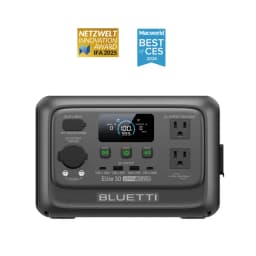
BLUETTI Elite 30 V2
- 0.3 kWh
- 600 W continuous
288 Wh with a 600 W inverter, double the 300 W small units, so it starts loads they cannot. Built for CPAP nights, routers and phones.
- 600 W inverter, double the 300 W small units
- 1,500 W surge, highest of the 288 Wh units
- 10 ms UPS switchover for a CPAP or router
- 600 W inverter: no microwave or kettle
- About 6 hours of CPAP per charge
About $279 at BLUETTI, checked Oct 10, 2026
Check price at BLUETTIPaid link. We earn a commission at no cost to you.
Show all 25 modelsShow fewer
Goal Zero Yeti 700
- 0.7 kWh
- 600 W continuous
677 Wh LiFePO4 at 20 lb with a clean sine-wave inverter. Pricier per watt-hour than the big four, with US-based support.
- 677 Wh at 20.3 lb
- Clean sine-wave inverter
- About 11 hours of fridge or 14 hours of CPAP
- 600 W inverter: no microwave or kettle
- Only two AC outlets
$500 to $1,000, live price on Amazon
Check price on AmazonPaid link. We earn a commission at no cost to you.
768Wh battery
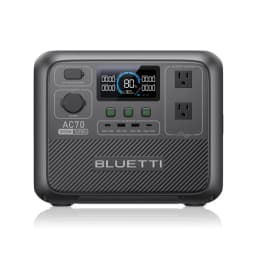
BLUETTI AC70
- 0.8 kWh
- 1,000 W continuous
768 Wh and 1,000 W at 22.5 lb, the sweet spot between a CPAP unit and a fridge unit.
- About 2 CPAP nights or 12 hours of fridge
- 500 W solar input
- 1,000 W inverter at 22.5 lb
- 1,000 W inverter: no microwave or kettle
- Only two AC outlets
About $359 at BLUETTI, checked Oct 10, 2026
Check price at BLUETTIPaid link. We earn a commission at no cost to you.
EcoFlow DELTA 3
- 1.0 kWh
- expands to 5 kWh
- 1,800 W continuous
1,024 Wh and 1,800 W with six AC outlets and a 10 ms switchover; expandable to 5 kWh later.
- Six AC outlets and a 1,800 W inverter
- Expands to 5 kWh, about 2 days of fridge
- 10 ms UPS switchover
- 500 W solar input, half the DELTA 3 Plus
- Not split-phase, no 240V
$500 to $1,000, live price on Amazon
Check price on AmazonPaid link. We earn a commission at no cost to you.
EcoFlow DELTA 3 Plus
- 1.0 kWh
- expands to 5 kWh
- 1,800 W continuous
Same box as the DELTA 3 with dual 500 W solar inputs, for people who will actually recharge from panels.
- 1,000 W solar input, double the DELTA 3
- Expands to 5 kWh, about 2 days of fridge
- Six AC outlets and 10 ms UPS switchover
- 1,024 Wh base, about 17 hours of fridge before expansion
- Not split-phase, no 240V
$500 to $1,000, live price on Amazon
Check price on AmazonPaid link. We earn a commission at no cost to you.
Anker SOLIX C1000 Gen 2
- 1.0 kWh
- 2,000 W continuous
Lighter 1,024 Wh unit with a 2,000 W inverter and 10 ms UPS; not expandable.
- 2,000 W inverter, highest of the 1 kWh class
- 10 ms UPS switchover
- About 17 hours of a full-size fridge per charge
- Not expandable
- Four AC outlets, two fewer than the original C1000
About $500 at Anker SOLIX, checked Oct 13, 2026
Check price at Anker SOLIXPaid link. We earn a commission at no cost to you.
1,024Wh battery
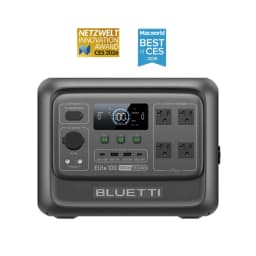
BLUETTI Elite 100 V2
- 1.0 kWh
- 1,800 W continuous
1,024 Wh, 1,800 W, 25 lb and 1,000 W of solar input. Hard to beat on paper at this price.
- 1,000 W solar input, tied for highest of the 1 kWh class
- 1,800 W inverter runs a coffee maker or microwave
- 10 ms UPS switchover
- Four AC outlets, fewer than the six-outlet 1 kWh units
- Not split-phase, no 240V
About $499 at BLUETTI, checked Oct 10, 2026
Check price at BLUETTIPaid link. We earn a commission at no cost to you.
1,024Wh battery
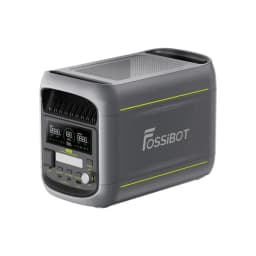
FOSSiBOT F1800
- 1.0 kWh
- 1,800 W continuous
The cheapest 1 kWh LiFePO4 unit we list: 1,024 Wh and 1,800 W for around $399, about 17 hours of fridge per charge.
- About 17 hours of a full-size fridge per charge
- 1,800 W inverter runs a coffee maker or microwave
- 10 ms UPS switchover
- Only two AC outlets, fewest of the 1 kWh class
About $399 at FOSSiBOT, checked Oct 12, 2026
Check price at FOSSiBOTPaid link. We earn a commission at no cost to you.
Anker SOLIX C1000
- 1.1 kWh
- expands to 2 kWh
- 1,800 W continuous
1,056 Wh with six AC outlets and 1,800 W. The original C1000 is now the value pick while the Gen 2 is current.
- Six AC outlets and an 1,800 W inverter
- About 17 hours of fridge, 29 with the expansion battery
- Expansion tops out at 2,112 Wh
- 20 ms switchover, slower than the C1000 Gen 2
About $470 at Anker SOLIX, checked Oct 13, 2026
Check price at Anker SOLIXPaid link. We earn a commission at no cost to you.
Jackery Explorer 1000 v2
- 1.1 kWh
- 1,500 W continuous
The mid-size Jackery: 1,070 Wh, 1,500 W and under 24 lb, a good fit for a fridge through a one-day outage.
- Lightest 1 kWh class unit in our list at 23.8 lb
- About 17 hours of a full-size fridge per charge
- 1,500 W inverter runs a coffee maker or small microwave
- 400 W solar input, lowest of the 1 kWh class
- Three AC outlets
$250 to $500, live price on Amazon
Check price on AmazonPaid link. We earn a commission at no cost to you.
1,152Wh battery
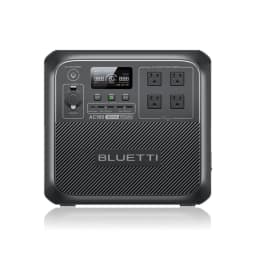
BLUETTI AC180
- 1.2 kWh
- 1,800 W continuous
Previous-generation 1,152 Wh unit; heavier than the Elite 100 V2 but a bit more capacity for the same money.
- 1,152 Wh, most capacity of the 1 kWh class
- About 19 hours of fridge or 3 CPAP nights
- 1,800 W inverter runs a coffee maker or microwave
- Heaviest of the 1 kWh class at 35.3 lb
- Previous-generation model with 20 ms switchover
About $499 at BLUETTI, checked Oct 10, 2026
Check price at BLUETTIPaid link. We earn a commission at no cost to you.
Jackery Explorer 2000 v2
- 2.0 kWh
- 2,200 W continuous
Two kilowatt-hours in a non-expandable box that stays under 40 lb.
- Lightest 2 kWh unit in our list at 38.6 lb
- About 33 hours of a full-size fridge per charge
- 2,200 W inverter runs a microwave or coffee maker
- Not expandable, 2 kWh is the ceiling
- 400 W solar input, lowest of the 2 kWh units
$500 to $1,000, live price on Amazon
Check price on AmazonPaid link. We earn a commission at no cost to you.
Jackery Explorer 2000 Plus
- 2.0 kWh
- expands to 12 kWh
- 3,000 W continuous
Expandable 2 kWh unit with a 3,000 W inverter; add battery packs for multi-day outages.
- Expands to 12 kWh, about 7 days of fridge
- 3,000 W inverter with 6,000 W surge
- 1,400 W solar input for faster panel recharging
- Over 60 lb at 61.5 lb
- Not split-phase, no 240V
$1,000 to $2,000, live price on Amazon
Check price on AmazonPaid link. We earn a commission at no cost to you.
EcoFlow DELTA 2 Max
- 2.0 kWh
- expands to 6 kWh
- 2,400 W continuous
Older 2 kWh workhorse that is often discounted; expands to 6 kWh with two extra batteries.
- Expands to 6,144 Wh, about 3 days of fridge
- 2,400 W inverter and six AC outlets
- 1,000 W solar input
- Over 50 lb at 50.7 lb
- 20 ms switchover, slower than the DELTA 3 line
$500 to $1,000, live price on Amazon
Check price on AmazonPaid link. We earn a commission at no cost to you.
Anker SOLIX C2000 Gen 2
- 2.0 kWh
- expands to 4 kWh
- 2,400 W continuous
2 kWh and 2,400 W at under 42 lb, with a TT-30 RV outlet and a 4 kWh expansion option.
- TT-30 RV outlet for a camper
- Expands to 4,096 Wh, about 2 days of fridge
- 10 ms UPS switchover
- Expansion tops out at 4 kWh
- Not split-phase, no 240V
About $900 at Anker SOLIX, checked Oct 13, 2026
Check price at Anker SOLIXPaid link. We earn a commission at no cost to you.
2,048Wh battery
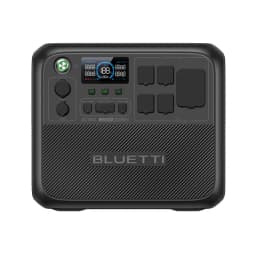
BLUETTI AC200L
- 2.0 kWh
- expands to 8 kWh
- 2,400 W continuous
2 kWh with 2,400 W, a 30 A RV outlet and expansion to 8 kWh.
- 30 A RV outlet for a camper
- Expands to 8,192 Wh, about 4 days of fridge
- 1,200 W solar input
- Over 60 lb at 62.4 lb
- Not split-phase, no 240V
About $899 at BLUETTI, checked Oct 10, 2026
Check price at BLUETTIPaid link. We earn a commission at no cost to you.
2,048Wh battery
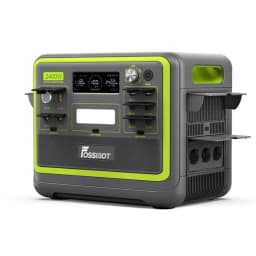
FOSSiBOT F2400
- 2.0 kWh
- 2,400 W continuous
2,048 Wh and 2,400 W with six AC outlets for around $899, about a day and a half of fridge per charge.
- Six AC outlets and a 2,400 W inverter
- About 33 hours of a full-size fridge per charge
- 10 ms UPS switchover
- 500 W solar input, low for a 2 kWh unit
- Not split-phase, no 240V
About $899 at FOSSiBOT, checked Oct 12, 2026
Check price at FOSSiBOTPaid link. We earn a commission at no cost to you.
2,074Wh battery
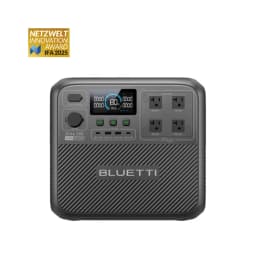
BLUETTI Elite 200 V2
- 2.1 kWh
- 2,600 W continuous
2,074 Wh and a 2,600 W inverter at 53 lb, rated for 6,000 cycles. Not expandable.
- Rated for 6,000 cycles
- 2,600 W inverter and 10 ms UPS switchover
- About 34 hours of a full-size fridge per charge
- Not expandable
- Over 50 lb at 53.4 lb
About $899 at BLUETTI, checked Oct 10, 2026
Check price at BLUETTIPaid link. We earn a commission at no cost to you.
3,014Wh battery
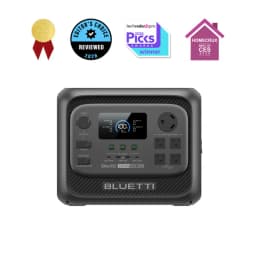
BLUETTI Elite 300
- 3.0 kWh
- 2,400 W continuous
3 kWh with 2,400 W continuous and a 10 ms UPS. The step between the 2 kWh class and the 240V units.
- 3,014 Wh, about 49 hours of fridge
- 2,400 W inverter runs a microwave or coffee maker
- 10 ms UPS switchover
- Not split-phase, no 240V
About $1,199 at BLUETTI, checked Oct 10, 2026
Check price at BLUETTIPaid link. We earn a commission at no cost to you.
Anker SOLIX F3800
- 3.8 kWh
- expands to 27 kWh
- 6,000 W continuous
- 120/240V
3.84 kWh with 6,000 W and real 240V outlets. Heavy, on wheels, and the cheapest route to running a well pump or dryer.
- 120/240V output for a well pump or dryer
- 6,000 W inverter, highest in our list
- Expands to 26,880 Wh, largest in our list
- Heaviest unit in our list at 132.3 lb
- 20 ms switchover, slower than the DELTA Pro 3
About $1,980 at Anker SOLIX, checked Oct 13, 2026
Check price at Anker SOLIXPaid link. We earn a commission at no cost to you.
3,840Wh battery
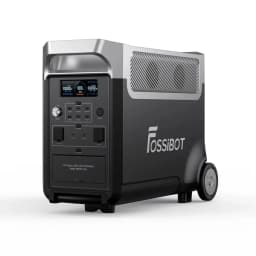
FOSSiBOT F3600 Pro
- 3.8 kWh
- expands to 12 kWh
- 3,600 W continuous
3,840 Wh and 3,600 W for around $1,199, the lowest cost per watt-hour of any complete unit we list. Expands to 11,520 Wh.
- 3,840 Wh, about 2 days of fridge per charge
- Expands to 11,520 Wh, about 6 days of fridge
- 3,600 W inverter and 2,000 W solar input
- Over 90 lb at 92.6 lb
- Not split-phase, no 240V
About $1,199 at FOSSiBOT, checked Oct 12, 2026
Check price at FOSSiBOTPaid link. We earn a commission at no cost to you.
EcoFlow DELTA Pro 3
- 4.1 kWh
- expands to 12 kWh
- 4,000 W continuous
- 120/240V
4 kWh, 4,000 W and 120/240V output. The top of the portable range before you are into home battery territory.
- 120/240V split-phase output
- Home panel compatible
- 2,600 W solar input, highest in our list
- Over 100 lb at 113.5 lb
Over $2,000, live price on Amazon
Check price on AmazonPaid link. We earn a commission at no cost to you.
Some of these links pay us a commission and some do not; each card says which. Commissions do not affect which models the tool picks or how it ranks them. See our disclosure.
How this calculator works
Three numbers decide whether a power station works for you. Watt-hours (Wh) is the size of the tank, meaning how much energy the battery stores. Continuous watts (W) is how fast the inverter can pour it out, which sets which appliances you can plug in at the same time. Surge watts is the short burst the inverter can supply while a motor starts. A fridge that draws 150 W while running can pull 1,200 W for a second at start-up, so a 300 W unit with a 600 W surge rating will trip even though the fridge only needs 52 Wh an hour on average.
To get the watt-hours, the tool multiplies each appliance's running watts by the hours a day you want it, then by its duty cycle, and adds them up. Duty cycle matters for anything with a compressor or thermostat. A fridge is "on" 24 hours a day but its compressor only runs about a third of that time, so it averages about 52 W, not 150 W. Space heaters cycle too once the room is warm, though an 8-hour run still eats 7,000 Wh or more. A CPAP works the same way. The blower alone is about 40 W, but a heated humidifier adds a heating element that pushes the draw to 100 W or more. Every CPAP maker tells you to turn the humidifier off on battery for that reason.
That daily figure is multiplied by your number of days, then divided by 0.85. The label capacity is what the cells store. The inverter, the DC-to-AC conversion and the battery management system eat 10 to 20% of it before it reaches an outlet, and 85% is a fair average for current LiFePO4 units. A further 10% margin covers the things people forget: the second phone, the fan, the cold night that makes the fridge work harder.
If you tick solar, the tool credits a panel with four peak-sun hours a day at 70% of its rated output. A 200 W panel therefore adds about 560 Wh a day in the model, which lines up with the 600 to 800 Wh a day owners report on a clear summer day and the 200 to 300 Wh they get in winter or under cloud. Solar is capped at covering 70% of the need because the battery still has to carry the load through the night.
Output is checked separately. By default the tool assumes everything on your list could be on at once, so it needs an inverter rated for the sum of the running watts and a surge rating that covers the biggest start-up on top of that. If you tell it the loads will not all run together, it sizes the inverter for the single largest appliance plus 30%.
Every product in the database is LiFePO4 except where noted. Those cells are rated for 3,000 to 6,000 cycles, so a unit cycled every weekend lasts decades. The older NMC packs were good for perhaps 800. Matching is strict. Capacity (or capacity with expansion batteries, flagged in the result), continuous watts, surge watts and your weight preference all have to pass.
Portable stations top out around 4,000 Wh and 4,000 W in a single box. If your need is above that, or if any appliance is 240V (well pump, dryer, central AC), the tool sends you to the home battery backup sizer or the generator sizer. Batteries win on silence, indoor use and zero fuel; generators win on multi-day runtime per dollar and on heating loads.
Worked examples
CPAP, 3 nights, no humidifier
- CPAP (no humidifier): 40 W, 8 h per night
- 3 nights, no solar
- Weight: any
1,242 Wh and 40 W of output. Best fit: EcoFlow DELTA 2 Max.
40 W x 8 h = 320 Wh a night, 960 Wh over 3 nights. Divided by 0.85 for inverter losses and times 1.1 for margin, the tool asks for 1,242 Wh and only 40 W of output. Best fit is the EcoFlow DELTA 2 Max (2,048 Wh, $500 to $1,000). Lightest that works is the EcoFlow DELTA 3 with one expansion battery, and the BLUETTI Elite 300 (3,014 Wh) is the most-headroom pick. A 1,000 Wh unit covers about 2.5 nights, so for one or two nights the 1 kWh class is plenty.
Fridge, Wi-Fi, phone and lamps, 1-day outage
- Refrigerator: 150 W, 24 h, 35% duty cycle
- Wi-Fi router 15 W, 24 h; phone charger 10 W, 3 h; 4 LED lamps 36 W, 5 h
- 1 day, no solar
2,368 Wh, 1,261 W surge. Best fit: BLUETTI Elite 300.
The fridge is 1,260 Wh of the 1,830 Wh daily total. After losses and margin the tool asks for 2,368 Wh, 211 W continuous and 1,261 W surge (the compressor start). Best fit is the BLUETTI Elite 300 (3,014 Wh). The FOSSiBOT F3600 Pro also covers it on its own battery, and most headroom is the EcoFlow DELTA Pro 3, whose kit adds an optional EcoFlow solar panel. If you can live with the fridge off overnight, a 2 kWh unit does the job.
Van, 2 days, 200 W solar
- Mini fridge 80 W, 24 h, 35% duty; laptop 50 W, 6 h
- Starlink 60 W, 8 h; 4 LED lamps 36 W, 4 h
- 2 days, 200 W panel
3,011 Wh after the solar credit. Best fit: BLUETTI Elite 300.
1,596 Wh a day, 3,192 Wh over 2 days, 4,131 Wh after losses and margin. The 200 W panel is credited with 1,120 Wh over the 2 days (200 W x 4 sun hours x 0.7 x 2), leaving 3,011 Wh to carry in the battery, with 226 W continuous and 646 W surge. Best fit is the BLUETTI Elite 300 at 3,014 Wh, a near-exact match. Most headroom is the EcoFlow DELTA Pro 3, and its kit adds two of EcoFlow's 160 W panels to match your 200 W of solar. Cut Starlink to 4 hours or skip the second day of fridge and the 2 kWh class fits.
Frequently asked questions
What size power station do I need for a CPAP?
A CPAP without its heated humidifier draws about 40 W, so one night of 8 hours is 320 Wh at the mask and about 375 Wh from the battery after inverter losses. A 300 Wh unit gets most people through one night on a DC cable, a 500 to 700 Wh unit covers one night with room to spare, and a 1,000 Wh unit covers about two and a half nights. Turn the humidifier off on battery, because with it on the draw roughly triples.
How long will a 1,000 Wh power station run a refrigerator?
About 16 hours. A full-size fridge draws around 150 W while the compressor runs, and the compressor runs about 35% of the time, so the average draw is about 52 W. 1,000 Wh x 0.85 usable divided by 52 W is roughly 16 hours. A 2,000 Wh unit runs it for about 32 hours. Keeping the door shut and the fridge full stretches this.
Jackery vs EcoFlow vs Anker vs BLUETTI: which is best?
They are closer than the marketing suggests. All four now use LiFePO4 cells, all offer 1 kWh and 2 kWh models with 1,800 to 2,600 W inverters, and all have app control. EcoFlow and BLUETTI tend to have the fastest charging and the most solar input. Jackery units are usually the lightest at a given capacity. Anker's SOLIX line is often the cheapest per watt-hour on sale. Buy on the specs the tool shows you (capacity, output, weight, solar input), not on the brand.
Can a power station run a space heater?
A 1,500 W heater runs on any unit with an 1,800 W or larger inverter, but it empties a 1,000 Wh battery in under an hour at full tilt and a 2,000 Wh battery in under two hours. Heating is where batteries make the least sense. Use an electric blanket (about 100 W) or a propane heater designed for indoor use, and keep the power station for the fridge, lights and electronics.
Can a power station run a microwave?
Yes, if the inverter is rated for it. A 1,000 W cooking microwave draws about 1,200 W from the wall, so you need at least a 1,500 W continuous inverter. Three minutes of microwaving uses about 60 Wh, so output is the limit and capacity hardly matters. Small 300 W units cannot run a microwave at all.
LiFePO4 vs lithium-ion (NMC): does it matter?
For a power station, yes. LiFePO4 (lithium iron phosphate, also written LFP) cells are rated for about 3,000 to 6,000 charge cycles before they fall to 80% capacity, against roughly 500 to 1,000 for the older NMC packs. They are also more tolerant of heat and less prone to thermal runaway. They do weigh more. LiFePO4 units are 20 to 30% heavier for the same watt-hours. Nearly every current model from the big four is LiFePO4.
Can I charge a power station while using it?
Almost all current models support pass-through charging, so you can run a load while the unit is plugged into the wall or a solar panel. Units that list a UPS switchover time (10 to 20 ms) will also keep a load running if the wall power drops, which is fine for a router, a fridge or a CPAP but not something to rely on for a desktop PC during a brownout. Pass-through does add heat, so expect slower charging when the load is heavy.
How long does a power station hold its charge in storage?
LiFePO4 units lose about 2 to 3% a month sitting idle, so a full unit is still around 80% after six months. Makers recommend storing at 50 to 80% charge and topping up every three to six months. Leave it plugged in only if the unit has a storage mode that holds the charge below 100%. Sitting at 100% for months is harder on the cells than sitting at 60%.
Is 2,000 Wh enough for a weekend of camping?
Usually. A typical camping load of a cooler fridge, lights, phones and a laptop is about 600 to 900 Wh a day, so a 2,000 Wh unit covers two days without recharging and three with a 100 to 200 W panel. It is not enough if you plan to run an electric kettle, induction cooktop or a space heater regularly, since each of those uses several hundred watt-hours an hour.
What do surge watts mean on a power station?
Surge (or peak) watts is the output the inverter can supply for a second or two while a motor starts. A fridge compressor rated at 150 W running can draw 1,000 to 1,200 W for a moment at start-up, and a sump pump or window AC pulls two to three times its running watts. The station's surge rating has to cover the largest start-up plus whatever else is already running, which is what the tool checks.
Marcus Reed
Founder and Editor, CrunchYourDollars
Marcus Reed builds the sizing tools on CrunchYourDollars. He is a software engineer with a long-running PC hardware and power supply habit, which is where the watts, watt-hours and surge math on this site comes from. Product specs are pulled from manufacturer data sheets, electricity rates from the U.S. Energy Information Administration, and water chemistry rules from the Water Quality Association. He is not a licensed electrician or plumber: the tools show the math and the matching models so you can make the call, and anything involving your electrical panel should be checked by a licensed pro.
More about CrunchYourDollars and how we researchGet notified when we add tools
An occasional email when a new sizing tool goes live or the product database is refreshed. No spam, unsubscribe anytime.