Two numbers size an off-grid solar system: the watt-hours you use in a day and the peak sun hours where the panels sit. Watt-hours set the battery. Sun hours in your worst month set the panels. Everything else, the controller, inverter, fuses and cables, follows from those two.
Our picks at a glance
From published specs and our sizing rules. Not lab tested.
- 1
Panel for every option
Callsun 200W N-Type Bifacial Solar Panel
200 watt panel
Check price at CallsunPaid link
- 2
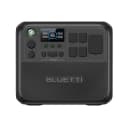
RV or no-wiring cabin
BLUETTI AC200L
2,048 Wh battery
Check price at BLUETTIPaid link
- 3
Year-round cabin
Growatt 3500W 48V All-in-One Solar Inverter
3,500 W inverter + MPPT
Check price on AmazonPaid link
- 4
240 V without wiring a bank
Anker SOLIX F3800 Plus
3,840 Wh battery
Check price at Anker SOLIXPaid link
There are three ways to buy it. A power station plus panels is the simplest: no wiring, it moves between the cabin and the house, and it works out of the box. A 12 or 24 V component kit (panels, MPPT controller, LiFePO4 battery, inverter) costs less per watt-hour for a shed, van or weekend cabin, but you wire it. A 48 V all-in-one inverter with a rack battery is the setup for a cabin or tiny home lived in year-round, and the Growatt SPE 6000 adds 240 V for a well pump.
Short answer: for an RV or a cabin you visit, the BLUETTI AC200L or a Nature's Generator Lithium 3600 with Callsun 200 W panels. For a weekend cabin you are willing to wire, a 24 V Renogy and LiTime kit. For year-round use in a cloudy state, a Growatt 48 V all-in-one, because winter needs about twice the panels summer does.
Top picks, and why
Callsun 200W N-Type Bifacial Solar Panel
- Bifacial
- Voc 27.3 V
- 51.3 x 30.3 in
- 23.8 lb
200 W bifacial N-type glass panel with MC4 leads. Every kit our off-grid calculator builds uses it, and it also charges the power stations below (match the string voltage to the station's input range). about $161.99 each, with 2 to 16 packs on Callsun's store.
- Split-cell design keeps one half producing when the other is shaded
- IP68 junction box, tempered glass, aluminum frame
- Callsun's store sells 2, 4, 8, 12 and 16 packs
- 51.3 x 30.3 in and 23.8 lb per panel
- Needs mounting hardware for a roof or ground rack
About $161.99 at Callsun, checked Oct 24, 2026
Check price at CallsunPaid link. We earn a commission at no cost to you.
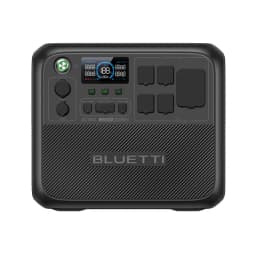
2,048Wh battery
BLUETTI AC200L
- 2.0 kWh
- expands to 8 kWh
- 2,400 W continuous
2,048 Wh and 2,400 W with a 30 A RV outlet and 1,200 W of solar input, about 4,400 Wh back on a 4.7 sun-hour day with six 200 W panels. Expands to 8,192 Wh. about $899.
- 30 A RV outlet for a camper
- Expands to 8,192 Wh, about 4 days of fridge
- 1,200 W solar input
- Over 60 lb at 62.4 lb
- Not split-phase, no 240V
About $899 at BLUETTI, checked Oct 10, 2026
Check price at BLUETTIPaid link. We earn a commission at no cost to you.
Growatt 3500W 48V All-in-One Solar Inverter
- 3,500 W continuous
- 48 V
- 4,500 W PV
- 7,000 W peak
+1 moreFewer
- UL 1741
3,500 W inverter with the MPPT charger built in for a 48 V bank, so one box replaces the controller and inverter. Takes up to 4,500 W of panels. $500 to $1,000.
- Up to 4,500 W of panels at 120 to 225 V
- 7,000 W peak
- UL 1741 certified
- String voltage must stay 120 to 225 V, so at least six of our panels in series
- 120 V only; 240 V needs two units or the 6,000 W split phase model
$500 to $1,000, live price on Amazon
Check price on AmazonPaid link. We earn a commission at no cost to you.
Anker SOLIX F3800 Plus
- 3.8 kWh
- expands to 27 kWh
- 6,000 W continuous
- 120/240V
3,840 Wh, 6,000 W at 120/240 V and 3,200 W of solar input in one box, for a cabin with a 240 V well pump. Expands to 26,880 Wh. about $2,400.
- 120/240V split phase, so it can run 240V loads like a well pump
- 9,000 W surge covers a 1/2 HP well pump start
- 3,200 W solar input, more than the original F3800 (2,400 W)
- 137 lb, plan to keep it in one place
- 20 ms switchover, slower than the 0 ms Jackery Explorer 5000 Plus
About $2,400 at Anker SOLIX, checked Oct 13, 2026
Check price at Anker SOLIXPaid link. We earn a commission at no cost to you.
Compare every pick
Paid links: we earn a commission if you buy, at no cost to you. Amazon prices change often, so we show a range and link to the live price.
Size it: daily watt-hours, then battery, then panels
Start with watt-hours per day: each load's watts x hours of use, with fridges and freezers at their duty cycle (a 150 W fridge running a third of the time is about 1,200 Wh a day). Then three steps, the same ones our off-grid solar calculator runs.
1. Battery draw. Divide the AC watt-hours by 0.9 for inverter losses. A 2,000 Wh day draws about 2,222 Wh from the battery.
2. Battery bank. Multiply by the days you want to ride through without sun, then divide by 0.9 so the bank never drops below 10%. Two days of 2,222 Wh is about 4,938 Wh of LiFePO4 nameplate.
3. Panels. Divide the daily battery draw by your sun hours x 0.78. The 0.78 covers wiring, dust, heat, mismatch and charging losses (PVWatts' 14% system loss, then 95% battery and 96% controller efficiency). In Albany, NY, the worst summer month gets 4.7 sun hours, so 2,222 / (4.7 x 0.78) = about 603 W, four 200 W panels. The worst winter month gets 2.2, so the same cabin needs about 1,288 W, seven panels.
That winter-to-summer gap is the most common sizing mistake. If the cabin closes from November to March, size for the summer number. If someone lives there year-round, size for winter or plan on a generator for the darkest weeks. Phoenix stays at 4.9 sun hours even in its worst month; Seattle drops to 1.7.
Callsun 200W N-Type Bifacial Solar Panel
- Bifacial
- Voc 27.3 V
- 51.3 x 30.3 in
- 23.8 lb
200 W, Voc 27.3 V, 51.3 x 30.3 in and 23.8 lb. Split cells keep half the panel producing when the other half is shaded. about $161.99 each.
- Split-cell design keeps one half producing when the other is shaded
- IP68 junction box, tempered glass, aluminum frame
- Callsun's store sells 2, 4, 8, 12 and 16 packs
- 51.3 x 30.3 in and 23.8 lb per panel
- Needs mounting hardware for a roof or ground rack
About $161.99 at Callsun, checked Oct 24, 2026
Check price at CallsunPaid link. We earn a commission at no cost to you.
Option 1: power station plus panels (RV, weekend cabin, no wiring)
A power station is battery, inverter and MPPT charger in one case. You plug panels into its solar input and appliances into its outlets. Nothing to fuse or crimp, it comes home with you, and it doubles as outage backup.
Its limit is the solar input rating. Daily refill is about input watts x sun hours x 0.78, and only if you buy enough panels to reach it. A 1,000 W input with five 200 W panels returns about 3,700 Wh on a 4.7 sun-hour day and about 1,700 Wh on a 2.2 sun-hour winter day. Check the station's input voltage range before wiring panels in series.
For the 2,000 Wh a day cabin above with one day of reserve, you need about 2,470 Wh of battery. The Nature's Generator Lithium 3600 covers it alone. The BLUETTI AC200L and Anker SOLIX C2000 Gen 2 cover it with one expansion battery.
2,048Wh battery
BLUETTI AC200L
- 2.0 kWh
- expands to 8 kWh
- 2,400 W continuous
2,048 Wh, 2,400 W, a 30 A RV outlet and 1,200 W of solar input. Expands to 8,192 Wh with B300K packs. about $899.
- 30 A RV outlet for a camper
- Expands to 8,192 Wh, about 4 days of fridge
- 1,200 W solar input
- Over 60 lb at 62.4 lb
- Not split-phase, no 240V
About $899 at BLUETTI, checked Oct 10, 2026
Check price at BLUETTIPaid link. We earn a commission at no cost to you.
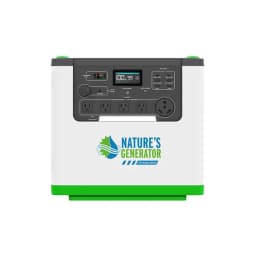
3,072Wh battery
Nature's Generator L3600
- 3.1 kWh
- expands to 18 kWh
- 3,600 W continuous
3,072 Wh and 3,600 W with a TT-30R outlet and 2,400 W of solar input, about 4,100 Wh back even on a 2.2 sun-hour winter day with 12 panels. Expands to 18,432 Wh with Power Pods. Sold direct, about $2,000.
- 3,600 W continuous, 7,200 W peak (maker)
- Expands to 18.4 kWh with five Power Pods
- 10 ms UPS switchover
- 120V only
- 97 lb
- 1-year limited warranty
About $2,000 at Nature's Generator, checked Oct 19, 2026
Check price at Nature's GeneratorPaid link. We earn a commission at no cost to you.
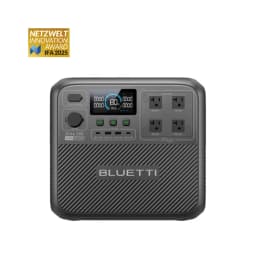
2,074Wh battery
BLUETTI Elite 200 V2
- 2.1 kWh
- 2,600 W continuous
2,074 Wh and 2,600 W at 53.4 lb, rated for 6,000 cycles, with 1,000 W of solar input. Not expandable, so buy it if 2 kWh covers your day. about $899.
- Rated for 6,000 cycles
- 2,600 W inverter and 10 ms UPS switchover
- About 34 hours of a full-size fridge per charge
- Not expandable
- Over 50 lb at 53.4 lb
About $899 at BLUETTI, checked Oct 10, 2026
Check price at BLUETTIPaid link. We earn a commission at no cost to you.
Anker SOLIX C2000 Gen 2
- 2.0 kWh
- expands to 4 kWh
- 2,400 W continuous
2,048 Wh and 2,400 W at 41.7 lb with a TT-30 RV outlet and 800 W of solar input. Expands to 4,096 Wh. about $900.
- TT-30 RV outlet for a camper
- Expands to 4,096 Wh, about 2 days of fridge
- 10 ms UPS switchover
- Expansion tops out at 4 kWh
- Not split-phase, no 240V
About $900 at Anker SOLIX, checked Oct 13, 2026
Check price at Anker SOLIXPaid link. We earn a commission at no cost to you.
Anker SOLIX F3800 Plus
- 3.8 kWh
- expands to 27 kWh
- 6,000 W continuous
- 120/240V
120/240 V split phase, 6,000 W and 9,000 W surge, 3,840 Wh and 3,200 W of solar input, about 5,500 Wh a day on a 2.2 sun-hour day with 16 panels. about $2,400.
- 120/240V split phase, so it can run 240V loads like a well pump
- 9,000 W surge covers a 1/2 HP well pump start
- 3,200 W solar input, more than the original F3800 (2,400 W)
- 137 lb, plan to keep it in one place
- 20 ms switchover, slower than the 0 ms Jackery Explorer 5000 Plus
About $2,400 at Anker SOLIX, checked Oct 13, 2026
Check price at Anker SOLIXPaid link. We earn a commission at no cost to you.
Option 2: 12 or 24 V component kit (shed, van, weekend cabin)
Separate parts cost less per watt-hour and let you grow one piece at a time. 12 V suits a shed, van or RV house system. Once the inverter passes about 1,000 W, 24 V halves the battery current, which means thinner cable and smaller fuses.
A shed that uses 500 Wh a day (lights plus an hour of tools) in Denver's worst winter month, 4.2 sun hours, needs about 169 W of panel and 617 Wh of battery for one day. The kit: one 200 W panel, a 40 A MPPT controller, one 12 V 100 Ah LiTime battery and a 1,000 W inverter, plus the Class T fuse, cables and controller fuse, about $500 to $1,000 in all.
The 2,000 Wh a day cabin in an Albany summer moves to 24 V: four panels in series (about 95 V, under 137 V on a cold morning), a 60 A controller, two 24 V 100 Ah batteries on bus bars (5,120 Wh) and a 2,000 W inverter, about over $2,000 with fuses and cables.
LiTime 12V 100Ah LiFePO4 Battery
- 1.3 kWh
- 100 A BMS
- Max 4P4S
- 22.2 lb
1,280 Wh LiFePO4 with a 100 A BMS, up to four in parallel. $250 to $500.
- Up to 4 in parallel or 4P4S
- 22.16 lb, 13 x 6.77 x 9.08 in
- 4,000+ cycles at 100% depth of discharge per LiTime
- 100 A BMS: a 2,000 W inverter at 12 V needs two in parallel
- Non-Bluetooth version
$250 to $500, live price on Amazon
Check price on AmazonPaid link. We earn a commission at no cost to you.
Renogy Rover 40A MPPT Charge Controller (Bluetooth)
- 12/24 V
- 100 V PV input
- Bluetooth
40 A MPPT for 12 or 24 V lithium banks, about 520 W of panels at 12 V, Bluetooth module included. $100 to $250.
- Auto-detects 12 or 24 V
- Bluetooth module included for the Renogy DC Home app
- Fanless, silent
- 100 V PV input limit means at most two of our panels in series
- Lithium charging is set manually
$100 to $250, live price on Amazon
Check price on AmazonPaid link. We earn a commission at no cost to you.
Renogy P2 1000W Pure Sine Wave Inverter (12V)
- 1,000 W continuous
- 2,000 W surge
- UL 458
- Hardwire terminal
1,000 W continuous, 2,000 W surge pure sine for lights, chargers and small tools. $100 to $250.
- UL 458 certified
- GFCI outlets plus a hardwire terminal
- 16.4 ft wired remote
- Included 3 ft cables are 4 AWG; this tool sizes heavier cable for the fuse
$100 to $250, live price on Amazon
Check price on AmazonPaid link. We earn a commission at no cost to you.
LiTime 24V 100Ah LiFePO4 Battery
- 2.6 kWh
- 100 A BMS
- Max 4P2S
- 45.9 lb
2,560 Wh native 24 V with a 100 A BMS, so no series wiring. Two give the 5,120 Wh the weekend cabin needs. $500 to $1,000.
- Up to 4 in parallel (max 4P2S)
- Low-temp cutoff
- 45.85 lb
- 21 x 8.2 x 8.5 in, check the space
- Non-Bluetooth version
$500 to $1,000, live price on Amazon
Check price on AmazonPaid link. We earn a commission at no cost to you.
Renogy Rover Lite 60A MPPT Charge Controller
- 12 to 48 V
- 150 V PV input
- Max 900 W at 12 V, 1,800 W at 24 V
60 A MPPT with a 150 V input, up to 1,800 W of panels at 24 V. $100 to $250.
- 150 V PV input fits four of our panels in series
- 12, 24, 36 or 48 V battery
- Rated for full load from -31 F to 113 F
- Bluetooth module sold separately
$100 to $250, live price on Amazon
Check price on AmazonPaid link. We earn a commission at no cost to you.
Renogy 2000W Pure Sine Wave Inverter (24V)
- 2,000 W continuous
- 4,000 W peak
- 92% efficiency
- GFCI
2,000 W continuous, 4,000 W surge pure sine on 24 V, half the battery current of a 12 V 2,000 W setup. $250 to $500.
- 4,000 W peak
- 92% efficiency per Renogy
- Two GFCI outlets, terminal block and remote
- 24 V only
$250 to $500, live price on Amazon
Check price on AmazonPaid link. We earn a commission at no cost to you.
Option 3: 48 V all-in-one for a year-round cabin or tiny home
An all-in-one inverter/charger has the MPPT built in and runs from a 48 V bank. One box replaces the controller and inverter, and 48 V keeps battery current low enough for a 3,500 to 6,000 W inverter.
The same 2,000 Wh cabin, lived in through an Albany winter, needs about 1,288 W of panels. The Growatt 3,500 W needs at least 120 V from the array to charge, so all seven panels go in one series string: about 166 V running and 239 V on a cold morning, inside its 280 V limit. One 5,120 Wh ECO-WORTHY rack battery holds the two days. Total about over $2,000 with the fuse and cables.
A string over 150 V DC is a shock hazard well beyond a 12 or 24 V system. Use a DC disconnect, never pull MC4 connectors under load, and have an electrician wire the array and the AC side.
If the cabin has a 240 V well pump or appliance, the Growatt SPE 6000 gives 120/240 V split phase from the same 48 V bank, with two MPPT inputs and up to 9,000 W of panels.
Growatt 3500W 48V All-in-One Solar Inverter
- 3,500 W continuous
- 48 V
- 4,500 W PV
- 7,000 W peak
+1 moreFewer
- UL 1741
3,500 W, 7,000 W peak, MPPT charger built in, up to 4,500 W of panels, UL 1741. $500 to $1,000.
- Up to 4,500 W of panels at 120 to 225 V
- 7,000 W peak
- UL 1741 certified
- String voltage must stay 120 to 225 V, so at least six of our panels in series
- 120 V only; 240 V needs two units or the 6,000 W split phase model
$500 to $1,000, live price on Amazon
Check price on AmazonPaid link. We earn a commission at no cost to you.
ECO-WORTHY Cubix100 48V 100Ah Server Rack Battery
- 5.1 kWh
- UL9540
- Server rack
- Wi-Fi and Bluetooth
5,120 Wh 48 V rack battery, UL9540 and UL1973 listed, parallel and communication cables in the box, up to 32 in parallel. $500 to $1,000.
- UL9540, UL9540A and UL1973 listed
- CAN/RS485 plus Bluetooth and Wi-Fi monitoring
- Parallel cables included, up to 32 units
- 100 A continuous per battery (retailer spec), so a 6,000 W inverter needs two
$500 to $1,000, live price on Amazon
Check price on AmazonPaid link. We earn a commission at no cost to you.
Growatt 6000W 48V Split Phase Off-Grid Inverter
- 6,000 W continuous
- 120/240V
- 120/240 V
- 2 MPPT
+2 moreFewer
- 550 V PV
- UL 1741
6,000 W at 120/240 V split phase, two MPPT inputs up to 550 V, 140 A battery charging and a generator input. The listing gives no surge rating, so confirm it for a pump start. $1,000 to $2,000.
- 120/240 V split phase
- Two MPPT inputs, up to 550 V PV
- 140 A battery charging, generator input
- The listing gives no surge rating
- Needs two 100 A rack batteries at full load
$1,000 to $2,000, live price on Amazon
Check price on AmazonPaid link. We earn a commission at no cost to you.
What to avoid
Sizing panels for July when you use the cabin in January. Use your worst month's sun hours.
Charging LiFePO4 below 32 F. In an unheated cabin or shed, keep the bank in an insulated box or a room that stays above freezing, or use a power station indoors.
Electric heat and cooking. Space heaters, ranges, water heaters and dryers are the hardest loads for off-grid solar. Propane or wood for heat and cooking usually cuts the system to a fraction of the size.
Skipping the main fuse. A LiFePO4 bank can deliver thousands of amps into a short. A Class T fuse within 7 in of the battery positive (ABYC E-11) is the part that prevents a fire.
ZOOKOTO 150A Class T Fuse with Block
- 10 kA interrupt
Class T, 10 kA interrupt rating, mounted next to the battery positive. 150 A covers every kit sized above. under $100.
Under $100, live price on Amazon
Check price on AmazonPaid link. We earn a commission at no cost to you.
The bottom line
From published specs and our sizing rules. Not lab tested.
- 1
Panel for every option
Callsun 200W N-Type Bifacial Solar Panel
200 watt panel
Check price at CallsunPaid link
- 2
RV or no-wiring cabin
BLUETTI AC200L
2,048 Wh battery
Check price at BLUETTIPaid link
- 3
Year-round cabin
Growatt 3500W 48V All-in-One Solar Inverter
3,500 W inverter + MPPT
Check price on AmazonPaid link
- 4
240 V without wiring a bank
Anker SOLIX F3800 Plus
3,840 Wh battery
Check price at Anker SOLIXPaid link
Frequently asked questions
How big a solar system do I need for an off-grid cabin?
Add up the watt-hours you use per day, divide by 0.9 for inverter losses, then divide by your worst month's sun hours x 0.78 for panel watts. A cabin using 2,000 Wh a day needs about 603 W of panels in an Albany, NY summer (4.7 sun hours) and about 1,288 W in its winter (2.2 sun hours). For two days without sun it needs about 4,938 Wh of LiFePO4 battery.
Power station or component kit for a cabin?
A power station if you want no wiring, need it portable, or use the cabin a few weekends a year. A component kit if the system stays in one place and you want the lowest cost per watt-hour or room to grow. For year-round living, a 48 V all-in-one with a rack battery handles larger inverters and arrays than a power station's solar input allows.
How many solar panels do I need for an RV?
Most RVs using about 1,200 Wh a day need about 340 W of panels at 5 sun hours, so two 200 W panels. RV roofs limit you, so check the space: a Callsun 200 W panel is 51.3 x 30.3 in. If you camp in winter or shade, add panels or plan on a generator.
12 V, 24 V or 48 V for off-grid solar?
12 V for a van, RV or shed with an inverter up to about 1,000 W (2,000 W in an RV). 24 V for a cabin with a 1,000 to 2,000 W inverter, since it halves the battery current. 48 V for anything bigger, a big array, or 240 V loads, and it is the only option with the all-in-one inverters here.
How many batteries do I need for an off-grid cabin?
Daily battery watt-hours x days without sun / 0.9. A 2,000 Wh a day cabin with two days of reserve needs about 4,938 Wh: two 24 V 100 Ah LiTime batteries (5,120 Wh) or one 48 V ECO-WORTHY rack battery (5,120 Wh). More days of reserve is cheaper than enough panels for the cloudiest week.
Can off-grid solar run a well pump?
Yes, if the inverter covers the pump's start surge and voltage. A 240 V pump needs a split-phase unit such as the Growatt SPE 6000 or the Anker SOLIX F3800 Plus, whose 9,000 W surge covers a 1/2 HP pump start. Check your pump's nameplate amps and voltage before you buy.
Do solar batteries work in a cold cabin?
LiFePO4 batteries must not be charged below 32 F, and capacity drops in the cold. Keep the bank inside an insulated box or a heated room. Cold also raises panel voltage, which is why string limits use 1.25 x the panel's open circuit voltage.
How long do off-grid solar batteries last?
LiFePO4 is typically rated for thousands of cycles; the BLUETTI Elite 200 V2, for example, is rated for 6,000. Our sizing keeps 10% in reserve, which helps the bank last. Panels last much longer than batteries, so plan to replace the bank first.
20 products are linked on this page. We have not lab-tested these products; picks are based on published specifications and our sizing rules. Amazon prices change, so we show a range and link to the live price. See our disclosure.
Size it for your home
Marcus Reed
Founder and Editor, CrunchYourDollars
Marcus Reed builds the sizing tools on CrunchYourDollars. He is a software engineer with a long-running PC hardware and power supply habit, which is where the watts, watt-hours and surge math on this site comes from. Product specs are pulled from manufacturer data sheets, electricity rates from the U.S. Energy Information Administration, and water chemistry rules from the Water Quality Association. He is not a licensed electrician or plumber: the tools show the math and the matching models so you can make the call, and anything involving your electrical panel should be checked by a licensed pro.
More about CrunchYourDollars and how we researchGet notified when we add tools
An occasional email when a new sizing tool goes live or the product database is refreshed. No spam, unsubscribe anytime.