You have a portable generator and a house full of hardwired loads it cannot reach by extension cord: the furnace, the well pump, the circuits behind the walls. For most homes the fix is an interlock kit plus a 30 A inlet box. It is the cheapest legal way to run those loads through your own breaker panel. Expect about $140 in parts and $300 to $800 for an electrician, and that labor figure swings a lot by region and by how far the inlet sits from the panel.
Our picks at a glance
From published specs and our sizing rules. Not lab tested.
- 1
Best value
GenInterlock SD-200A interlock kit (Square D QO and Homeline 150/200A panels)
Check price on AmazonPaid link
- 2
Simplest to use
Reliance Controls 31410CRK 10-Circuit Transfer Switch Kit
Check price on AmazonPaid link
- 3
Goes with the interlock
Reliance Controls PB30 30A Power Inlet Box
Check price on AmazonPaid link
A pre-wired manual transfer switch like the Reliance 31410CRK costs more, $250 to $500 in parts plus a similar install. In exchange it is simpler to operate and gets through some inspections more easily.
Both are legitimate transfer equipment. The so-called suicide cord is not. That is a male-to-male cord from the generator into a dryer or range outlet with the main breaker left on. It is illegal under the National Electrical Code, it energizes the utility line and can kill the lineman restoring your power, and when the grid comes back it can destroy your generator or start a fire. Every product in this guide exists so you never have to do that.
Our picks come from published ratings, panel compatibility lists and the code requirements. We have not installed every kit. Before buying an interlock, open your panel door and read the label for the brand, series and amperage, then size the generator you will feed it with using our generator sizing tool.
Top picks, and why
GenInterlock SD-200A interlock kit (Square D QO and Homeline 150/200A panels)
A sliding plate that physically keeps the main breaker and the generator backfeed breaker from being on at the same time. This SD-200A fits Square D QO and Homeline 150 and 200 A panels, and GenInterlock sells matching kits for Eaton BR, Siemens and GE. At under $100 it lets the generator feed any circuit in the panel.
- Stops the main and generator breaker being on together
- Fits Square D QO and Homeline 150 or 200 amp panels
- Other panel brands need a different kit
Under $100, live price on Amazon
Check price on AmazonPaid link. We earn a commission at no cost to you.
Reliance Controls 31410CRK 10-Circuit Transfer Switch Kit
A 30 A pre-wired manual transfer switch for 10 circuits, sold as a kit with the power inlet box and a 10 ft L14-30 cord. Each circuit gets its own Line-Off-Gen switch, and two wattmeters show how close you are to the generator's limit. $250 to $500 for the kit.
- Pre-wired switch for 10 circuits
- Kit includes an inlet box and 10 ft L14-30 cord
- 30A, needs a generator with an L14-30R outlet
- Needs an electrician to install
$250 to $500, live price on Amazon
Check price on AmazonPaid link. We earn a commission at no cost to you.
Reliance Controls PB30 30A Power Inlet Box
The outdoor L14-30 inlet the generator cord plugs into. It is wired to a 30 A two-pole breaker in the panel, the one the interlock plate guards. under $100. If your generator has a 50 A 14-50R outlet, buy the PB50 and 6 gauge wiring instead.
- Outdoor L14-30 inlet for the generator cord
- Pairs with an interlocked breaker in your panel
- Needs an electrician to wire it
- 30A L14-30 only, not for a 50A 14-50R outlet
Under $100, live price on Amazon
Check price on AmazonPaid link. We earn a commission at no cost to you.
Why backfeeding through a dryer outlet is illegal and deadly
A backfeed cord puts generator power onto your panel's bus bars. With the main breaker still on, that power goes back out through the meter and into the utility transformer, which steps it up from 240 V to several thousand volts on the distribution line. A lineman working on what should be a dead line can be killed, and it has happened. NEC Article 702 exists for this reason. It requires transfer equipment that makes it impossible for the generator and the utility to feed the panel at the same time.
It is dangerous to you as well. The cord has exposed live prongs the moment the engine starts. If the utility comes back while the generator is connected, two unsynchronized 240 V sources fight each other. The usual result is a destroyed generator and a welded breaker, with a real chance of fire. Insurers do not cover damage from an unpermitted backfeed, and many utilities pull the meter if they find one. An interlock or a transfer switch solves all of this for less than one generator repair.
How an interlock kit works, and why it must match your panel
An interlock is a steel plate on the panel cover. A two-pole breaker, usually 30 A, goes in the top position next to the main and is wired to the outdoor inlet box. The plate slides so that either the main breaker or the generator breaker can be on, never both. To switch to generator power you shut the main, slide the plate, turn on the generator breaker, then turn on only the circuits you need. You get the whole panel, which is the big advantage over a transfer switch.
Kits are panel-specific because the plate has to line up with the exact position and spacing of your main and the top breaker slot. The GenInterlock SD-200A fits Square D QO and Homeline 150 and 200 A panels with 1 3/8 in spacing. Eaton BR, Eaton CH, Siemens, GE, Murray and Cutler-Hammer panels each need their own kit. A kit for a vertical-main panel will not fit a horizontal one. Match the series, the amperage and the main breaker orientation on the label inside your door before you order.
Inspectors look for two things. The kit should be listed for your panel, and the generator breaker needs a hold-down clip so it cannot be pulled off the bus while energized. Generic universal plates often get rejected. The GenInterlock and Square D factory kits include the hold-down, and they are the two routes most inspectors accept.
GenInterlock SD-200A interlock kit (Square D QO and Homeline 150/200A panels)
Fits Square D QO and Homeline 150 and 200 A panels and includes the breaker hold-down. For an Eaton BR, Siemens or GE panel, order the matching GenInterlock kit for that series. The install and the price are the same.
- Stops the main and generator breaker being on together
- Fits Square D QO and Homeline 150 or 200 amp panels
- Other panel brands need a different kit
Under $100, live price on Amazon
Check price on AmazonPaid link. We earn a commission at no cost to you.
Inlet box, breaker and cord: the 30 A versus 50 A choice
Most portable generators from 5,000 to 9,000 W have an L14-30R outlet. That is 120/240 V at 30 A, or about 7,200 W, and it pairs with a 30 A inlet box, a 30 A two-pole breaker and 10 gauge wire. Generators above about 9,500 W usually add a 14-50R outlet at 50 A, which needs a 50 A inlet, a 50 A breaker and 6 gauge wire. Match all three to the generator's outlet. A 30 A inlet caps a bigger generator at 7,200 W.
The cord matters as much as the box. For 30 A, use a 10 gauge L14-30 cord and keep it to 25 ft if you can, because voltage drop on long thin cords makes motors like well pumps and furnace blowers run hot. The 25 ft Champion cord below is 10 gauge, the minimum for 30 A at that length. Set the generator at least 20 ft from the house with the exhaust pointed away. Before you ever start it, put a battery carbon monoxide alarm on every sleeping level.
Reliance Controls PB30 30A Power Inlet Box
Weatherproof L14-30 inlet for a 30 A generator feed. Mount it near the panel to keep the wiring run short, which also keeps the electrician's bill down.
- Outdoor L14-30 inlet for the generator cord
- Pairs with an interlocked breaker in your panel
- Needs an electrician to wire it
- 30A L14-30 only, not for a 50A 14-50R outlet
Under $100, live price on Amazon
Check price on AmazonPaid link. We earn a commission at no cost to you.
Champion 25 ft 30A L14-30 generator cord, 10 gauge (100395)
25 ft of 10 gauge SJTW with L14-30 ends. It carries the full 30 A with low voltage drop and lets the generator sit well away from windows and doors.
- 10-gauge SJTW wire carries 120/240V at 30A
- 25 ft keeps the generator away from the house
- Fits L14-30R outlets only
Under $100, live price on Amazon
Check price on AmazonPaid link. We earn a commission at no cost to you.
Kidde battery-powered carbon monoxide alarm
Generator exhaust kills more people in outages than the storms do. A battery alarm keeps working when the power is out. Put one on each sleeping level.
- Battery powered, keeps working during an outage
- Easy to add one on each sleeping level
- Alarm only, it does not shut off the generator
Under $100, live price on Amazon
Check price on AmazonPaid link. We earn a commission at no cost to you.
Manual transfer switch: pros and cons
A manual transfer switch like the Reliance 31410CRK is a small subpanel mounted next to your main panel. The electrician moves up to 10 chosen circuits into it, and each gets a three-position switch for Line, Off and Generator. During an outage you plug in the generator, start it, and flip the switches you want. Nothing to slide, no main breaker to shut. The built-in wattmeters show the load on each leg so you do not overload the generator. In a less technical household, this is the system you can hand to a spouse or a teenager.
Circuits are the limit. Ten slots sounds like plenty until a 240 V well pump or air handler takes two of them, and anything you did not pre-wire cannot be powered at all. Install labor also runs higher because every circuit gets rewired into the switch. The finished cost usually lands $300 to $600 above an interlock, which leaves the whole panel live and puts load management on you.
If you know exactly which 6 to 10 circuits you care about and want the simplest switchover, buy the transfer switch. If you want to run anything in the house within the generator's capacity, buy the interlock.
Reliance Controls 31410CRK 10-Circuit Transfer Switch Kit
30 A, 10 circuits, two wattmeters, with the PB30 inlet and a 10 ft cord in the box. Circuits that must be 240 V, like a well pump, take two slots, so count before you buy.
- Pre-wired switch for 10 circuits
- Kit includes an inlet box and 10 ft L14-30 cord
- 30A, needs a generator with an L14-30R outlet
- Needs an electrician to install
$250 to $500, live price on Amazon
Check price on AmazonPaid link. We earn a commission at no cost to you.
What an electrician charges, and permits
For an interlock kit and inlet box with a short run to the panel, electricians commonly quote $300 to $800 for labor. Add the roughly $140 in parts and a finished job is typically $450 to $950. A manual transfer switch install usually runs $800 to $1,800 all in because of the circuit rewiring. Rates vary a lot by region, by the distance from inlet to panel, and by whether a full panel needs a tandem breaker or a subpanel. Get two quotes and ask whether the price includes the permit.
Almost every jurisdiction requires an electrical permit for transfer equipment, usually $50 to $250, plus an inspection. The inspection confirms the interlock is listed for your panel, the breaker has its hold-down, and the inlet wiring is sized to the breaker. A permitted install also keeps your homeowner's insurance intact.
Southwire Yellow Jacket 10/3 50 ft extra heavy-duty extension cord (2805)
Not ready for panel work? A 10 gauge, 15 A outdoor cord from the generator to a fridge, freezer or sump pump is the safe way to do it. Run cords through a window or door, never into a dryer outlet. Nothing hardwired, like a furnace or well pump, can be powered this way.
- 10-gauge keeps voltage drop low at 50 ft
- Lighted end
- Suits motor loads like a sump pump or furnace blower
- 15A rating, same as the 12/3 cord
$100 to $250, live price on Amazon
Check price on AmazonPaid link. We earn a commission at no cost to you.
The battery-side equivalent: smart home panels
If your backup source is a home battery instead of a generator, there is a modern equivalent to the interlock and transfer switch. It is a smart subpanel that the electrician installs between your main panel and the circuits you want backed up, and it switches to the battery automatically in about 20 milliseconds when the grid drops. There is no cord to run and no engine to start at 2 am.
The EcoFlow Smart Home Panel 2 handles 12 circuits and pairs with a DELTA Pro Ultra or a DELTA Pro 3. The Anker SOLIX Smart Home Power Kit does the same job for the F3800 family. The EcoFlow panel costs $1,000 to $2,000 and the Anker kit around $1,200, both before the battery, and both need the same electrician and permit as a transfer switch. Weighing a generator against a battery for the same outages? Our home battery sizing tool tells you how many kilowatt-hours you actually need.
EcoFlow Smart Home Panel 2
12-circuit smart subpanel with 20 ms switchover for the DELTA Pro Ultra or DELTA Pro 3. $1,000 to $2,000 plus install. It also lets you schedule circuits to run from battery during peak rates.
- 12 circuits switch to battery automatically
- 20 ms switchover
- Works with DELTA Pro Ultra or DELTA Pro 3
- One battery family at a time, not both
- Panel work, plan on a licensed electrician
$1,000 to $2,000, live price on Amazon
Check price on AmazonPaid link. We earn a commission at no cost to you.
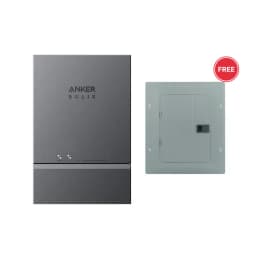
Anker SOLIX Smart Home Power Kit (Home Power Panel)
Smart panel, subpanel and breakers for the F3800 and F3800 Plus with 20 ms automatic switchover. Around $1,200 plus install. Because the F3800 puts out 120/240 V, it can carry a well pump through this panel.
- Switches your chosen circuits to battery automatically
- 20 ms switchover on backed-up circuits
- Smart panel, subpanel and breakers in one kit
- Built for the F3800 family of stations
- Panel work, plan on a licensed electrician
About $1,200 at Anker SOLIX, checked Oct 13, 2026
Check price at Anker SOLIXPaid link. We earn a commission at no cost to you.
The bottom line
From published specs and our sizing rules. Not lab tested.
- 1
Best value
GenInterlock SD-200A interlock kit (Square D QO and Homeline 150/200A panels)
Check price on AmazonPaid link
- 2
Simplest to use
Reliance Controls 31410CRK 10-Circuit Transfer Switch Kit
Check price on AmazonPaid link
- 3
Goes with the interlock
Reliance Controls PB30 30A Power Inlet Box
Check price on AmazonPaid link
Frequently asked questions
How much does it cost to install a generator interlock kit?
Parts are about $140, an interlock kit under $100 and a 30 A inlet box under $100, plus a 30 A two-pole breaker. Electricians commonly charge $300 to $800 for labor, so a finished job is typically $450 to $950, plus a $50 to $250 permit. Long runs from inlet to panel and full panels cost more.
Interlock kit or transfer switch, which is better?
An interlock makes every circuit in the panel available and costs $300 to $600 less installed, but you manage the load by hand. A manual transfer switch limits you to 6 to 10 pre-wired circuits. It is simpler to operate, though, and has wattmeters. Buy the switch if you know your critical circuits, and the interlock if you want flexibility.
Is it illegal to backfeed a generator through a dryer outlet?
Yes. NEC Article 702 requires transfer equipment that prevents the generator and utility from being connected at the same time. A backfeed cord energizes the utility line and can electrocute line workers, and when utility power returns it destroys the generator. Many utilities pull the meter and insurers deny claims when they find one.
Will the GenInterlock SD-200A fit my panel?
Only Square D QO and Homeline 150 and 200 A panels with 1 3/8 in breaker spacing and a vertical main. Eaton BR, Eaton CH, Siemens, GE and Murray panels each need their own kit. Read the label inside the panel door for the series, amperage and main breaker orientation before ordering.
What size inlet box and cord do I need?
Match the generator's outlet. An L14-30R outlet is 30 A and 7,200 W, so use a 30 A inlet, a 30 A two-pole breaker, 10 gauge wire and a 10 gauge L14-30 cord, ideally 25 ft or less. A 14-50R outlet is 50 A and 12,000 W and needs a 50 A inlet, 50 A breaker and 6 gauge wire and cord.
Do I need a permit for an interlock or transfer switch?
In almost every jurisdiction, yes. Expect $50 to $250 and an inspection that checks the kit is listed for your panel, the generator breaker has a hold-down clip, and the wiring matches the breaker. A permitted install also keeps your homeowner's insurance valid.
How far from the house should the generator run?
At least 20 ft from any window, door or vent, with the exhaust pointed away, per CPSC guidance. Never in a garage, even with the door open. Put a battery-powered CO alarm on every sleeping level, since those keep working during the outage.
What is the battery equivalent of a transfer switch?
A smart subpanel like the EcoFlow Smart Home Panel 2 (12 circuits, $1,000 to $2,000) or the Anker SOLIX Smart Home Power Kit (about $1,200). An electrician installs it between the main panel and your chosen circuits, and it switches to the battery automatically in about 20 ms when the grid drops.
Can I install a generator interlock kit myself?
It depends on where you live. Some jurisdictions issue homeowner permits for electrical work in your own house, while others require a licensed electrician. Either way it needs a permit and an inspection, and the service wires above the main breaker stay live even with the main off, so most people hire it out.
Why does the generator breaker need a hold-down clip?
A backfed breaker is energized from its own terminal, so if it were pulled off the bus it would have live metal exposed. NEC 408.36(D) requires backfed plug-in breakers to be secured by a fastener that takes more than a pull to release. Inspectors check for it, and the GenInterlock and Square D kits include one.
11 products are linked on this page. We have not lab-tested these products; picks are based on published specifications and our sizing rules. Amazon prices change, so we show a range and link to the live price. See our disclosure.
Size it for your home
Marcus Reed
Founder and Editor, CrunchYourDollars
Marcus Reed builds the sizing tools on CrunchYourDollars. He is a software engineer with a long-running PC hardware and power supply habit, which is where the watts, watt-hours and surge math on this site comes from. Product specs are pulled from manufacturer data sheets, electricity rates from the U.S. Energy Information Administration, and water chemistry rules from the Water Quality Association. He is not a licensed electrician or plumber: the tools show the math and the matching models so you can make the call, and anything involving your electrical panel should be checked by a licensed pro.
More about CrunchYourDollars and how we researchGet notified when we add tools
An occasional email when a new sizing tool goes live or the product database is refreshed. No spam, unsubscribe anytime.