Buy the Jackery Explorer 1000 v2 if you want the most battery for the least money and weight. It has 1,070 Wh at 23.8 lb for $250 to $500. Buy the EcoFlow DELTA 3 Plus if you need a bigger inverter, fast solar charging, a 10 ms UPS or room to grow, since it expands to 5 kWh and costs $500 to $1,000.
Our picks at a glance
From published specs and our sizing rules. Not lab tested.
- 1
Best value and lightest
Jackery Explorer 1000 v2
1,070 Wh battery
Check price on AmazonPaid link
- 2
Best for expansion and solar
EcoFlow DELTA 3 Plus
1,024 Wh battery
Check price on AmazonPaid link
For a fridge or CPAP through a one-night outage, the Jackery does the job for less. For multi-day outages, rooftop-sized solar or running a 1,500 W microwave with other loads on, the DELTA 3 Plus earns its price.
Tick your own appliances in the runtime table below and it ranks both units, plus two strong alternatives, by hours. Our power station sizer goes further and sizes the battery to your whole outage list.
Top picks, and why
Jackery Explorer 1000 v2
- 1.1 kWh
- 1,500 W continuous
1,070 Wh, 1,500 W continuous, 3,000 W surge and 23.8 lb for $250 to $500. That is more capacity than the DELTA 3 Plus for less money and 3.8 lb lighter. Buy it for a fridge, CPAP or campsite where you will not expand later.
- Lightest 1 kWh class unit in our list at 23.8 lb
- About 17 hours of a full-size fridge per charge
- 1,500 W inverter runs a coffee maker or small microwave
- 400 W solar input, lowest of the 1 kWh class
- Three AC outlets
$250 to $500, live price on Amazon
Check price on AmazonPaid link. We earn a commission at no cost to you.
EcoFlow DELTA 3 Plus
- 1.0 kWh
- expands to 5 kWh
- 1,800 W continuous
1,024 Wh, 1,800 W continuous, 3,600 W surge, six AC outlets, a 10 ms UPS and 1,000 W of solar across two inputs, $500 to $1,000. It expands to 5,000 Wh with extra batteries. Buy it if you plan to grow into multi-day backup or charge from panels.
- 1,000 W solar input, double the DELTA 3
- Expands to 5 kWh, about 2 days of fridge
- Six AC outlets and 10 ms UPS switchover
- 1,024 Wh base, about 17 hours of fridge before expansion
- Not split-phase, no 240V
$500 to $1,000, live price on Amazon
Check price on AmazonPaid link. We earn a commission at no cost to you.
Will it run your stuff?
Tick what you need to keep running. Every pick below re-sorts by how long it lasts on one charge.
Average draw about 104 W, peak about 1,251 W when the biggest motor starts.
- Check price on Amazon
Jackery Explorer 1000 v2
1,070 Wh, $250 to $500
about 9 hours
Paid link
- Check price on Amazon
EcoFlow DELTA 3 Plus
1,024 Wh, $500 to $1,000
about 8.5 hours
Paid link
- Check price at BLUETTI
BLUETTI Elite 100 V2
1,024 Wh, About $499 at BLUETTI
about 8.5 hours
Paid link
- Check price at Anker SOLIX
Anker SOLIX C1000 Gen 2
1,024 Wh, About $500 at Anker SOLIX
about 8.5 hours
Paid link
Runtime = capacity x 0.85 inverter efficiency / average draw, with fridges and freezers cycling on their compressors. Amazon links are paid links. Amazon prices change, so we show a range.
Compare every pick
Paid links: we earn a commission if you buy, at no cost to you. Amazon prices change often, so we show a range and link to the live price.
Spec table, side by side
Capacity is close, with the Jackery at 1,070 Wh against 1,024 Wh for the DELTA 3 Plus. Both use LiFePO4 cells.
Power goes to EcoFlow. The DELTA 3 Plus runs 1,800 W continuous with 3,600 W surge, while the Jackery runs 1,500 W with 3,000 W surge. EcoFlow also has six AC outlets to Jackery's three.
Solar input is the biggest gap. The DELTA 3 Plus takes 1,000 W, the Jackery 400 W. At typical real-world panel output of about 75 percent, that is roughly 1.4 hours of good sun to refill the EcoFlow and about 3.6 hours for the Jackery.
UPS switchover is 10 ms on the DELTA 3 Plus and 20 ms on the Jackery. Weight is 27.6 lb against 23.8 lb. Expansion is where they split completely. The DELTA 3 Plus grows to 5,000 Wh with 1,024 Wh add-on batteries, and the Jackery Explorer 1000 v2 does not expand.
Price is $500 to $1,000 for the DELTA 3 Plus and $250 to $500 for the Jackery. That works out to $0.70 to $0.80 per Wh against $0.40 to $0.50 per Wh.
Which one wins for your use
CPAP goes to the Jackery. A CPAP with the humidifier off draws about 40 W, so the Jackery gives about 23 hours and the DELTA 3 Plus about 22. The 20 ms switchover is fine for a CPAP. Pick the EcoFlow only if the same unit will also sit under a desktop PC as a UPS, where 10 ms is the safer margin.
A fridge outage of one night is a tie on runtime. At a 52 W average, the Jackery runs a full-size fridge for about 17.5 hours and the DELTA 3 Plus about 16.7 hours. Buy the Jackery for one-night outages. Buy the DELTA 3 Plus if outages in your area run two days or more, since a fully expanded 5,000 Wh setup runs the same fridge about 82 hours.
Camping goes to the Jackery. It is lighter and cheaper, and three AC outlets cover a campsite. Van life and off-grid cabins go to the DELTA 3 Plus because 1,000 W of solar refills it in a single afternoon.
Expansion is DELTA 3 Plus only. Budget goes to the Jackery, unless you want DELTA-class power at the Jackery's price, which brings in the BLUETTI below.
Jackery Explorer 1000 v2
- 1.1 kWh
- 1,500 W continuous
The most watt-hours per dollar and per pound of the two, $250 to $500. Its 1,500 W inverter starts a fridge and runs a coffee maker. Buy it unless expansion or fast solar is on your list.
- Lightest 1 kWh class unit in our list at 23.8 lb
- About 17 hours of a full-size fridge per charge
- 1,500 W inverter runs a coffee maker or small microwave
- 400 W solar input, lowest of the 1 kWh class
- Three AC outlets
$250 to $500, live price on Amazon
Check price on AmazonPaid link. We earn a commission at no cost to you.
EcoFlow DELTA 3 Plus
- 1.0 kWh
- expands to 5 kWh
- 1,800 W continuous
Twice the outlets, 2.5 times the solar input and half the UPS switchover time, plus the only expansion path of the two, $500 to $1,000. Buy it as the first piece of a backup system you will add to.
- 1,000 W solar input, double the DELTA 3
- Expands to 5 kWh, about 2 days of fridge
- Six AC outlets and 10 ms UPS switchover
- 1,024 Wh base, about 17 hours of fridge before expansion
- Not split-phase, no 240V
$500 to $1,000, live price on Amazon
Check price on AmazonPaid link. We earn a commission at no cost to you.
Two alternatives worth a look
The BLUETTI Elite 100 V2 matches the DELTA 3 Plus on capacity, inverter, surge, solar input and UPS speed for around $499. It does not expand, and it has four AC outlets. If you want EcoFlow-level specs without paying for expansion, this is the one to buy.
The Anker SOLIX C1000 Gen 2 has the biggest inverter of the group at 2,000 W, a 10 ms UPS and 600 W of solar input at 24.9 lb, about $500. It also does not expand. Pick it if you run a microwave or a small space heater off the battery.
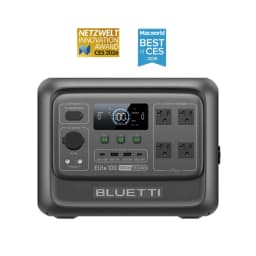
1,024Wh battery
BLUETTI Elite 100 V2
- 1.0 kWh
- 1,800 W continuous
1,024 Wh, 1,800 W, 3,600 W surge, 1,000 W solar and a 10 ms UPS at 25.3 lb, around $499. Same core specs as the DELTA 3 Plus for less. Buy it if you will never add a second battery.
- 1,000 W solar input, tied for highest of the 1 kWh class
- 1,800 W inverter runs a coffee maker or microwave
- 10 ms UPS switchover
- Four AC outlets, fewer than the six-outlet 1 kWh units
- Not split-phase, no 240V
About $499 at BLUETTI, checked Oct 10, 2026
Check price at BLUETTIPaid link. We earn a commission at no cost to you.
Anker SOLIX C1000 Gen 2
- 1.0 kWh
- 2,000 W continuous
1,024 Wh with a 2,000 W inverter, 3,000 W surge, 600 W solar and a 10 ms UPS at 24.9 lb, about $500. That extra 200 W over the DELTA covers higher-wattage kitchen gear. Buy it for heavy single loads in a light box.
- 2,000 W inverter, highest of the 1 kWh class
- 10 ms UPS switchover
- About 17 hours of a full-size fridge per charge
- Not expandable
- Four AC outlets, two fewer than the original C1000
About $500 at Anker SOLIX, checked Oct 13, 2026
Check price at Anker SOLIXPaid link. We earn a commission at no cost to you.
The bottom line
From published specs and our sizing rules. Not lab tested.
- 1
Best value and lightest
Jackery Explorer 1000 v2
1,070 Wh battery
Check price on AmazonPaid link
- 2
Best for expansion and solar
EcoFlow DELTA 3 Plus
1,024 Wh battery
Check price on AmazonPaid link
Frequently asked questions
Is the EcoFlow DELTA 3 Plus better than the Jackery Explorer 1000 v2?
It is better for expansion, solar charging and UPS use. The DELTA 3 Plus has 1,800 W, 1,000 W solar input, a 10 ms UPS and expands to 5 kWh. The Jackery has more capacity (1,070 Wh vs 1,024 Wh), weighs 3.8 lb less and costs less.
Which has more capacity, DELTA 3 Plus or Explorer 1000 v2?
The Jackery Explorer 1000 v2 has 1,070 Wh against 1,024 Wh for the DELTA 3 Plus. The DELTA 3 Plus can expand to 5,000 Wh with extra batteries, and the Jackery cannot.
How long will each run a refrigerator?
About 17.5 hours on the Jackery and 16.7 hours on the DELTA 3 Plus for a full-size fridge averaging 52 W. That uses the house formula of watt-hours x 0.85 divided by average watts. An expanded 5,000 Wh DELTA setup runs the same fridge about 82 hours.
Which is better for a CPAP?
The Jackery, on price and runtime. At 40 W with the humidifier off it gives about 23 hours, against about 22 on the DELTA 3 Plus. Both have UPS modes fast enough for a CPAP, and the Jackery is cheaper.
How fast do they charge from solar?
The DELTA 3 Plus takes up to 1,000 W of solar and the Jackery 400 W. With panels producing about 75 percent of their rating, that is roughly 1.4 hours of good sun for the DELTA and 3.6 hours for the Jackery.
Can I expand the Jackery Explorer 1000 v2?
No. The Explorer 1000 v2 is not expandable. If you want a Jackery that expands, the Explorer 2000 Plus grows to 12 kWh. In the 1 kWh class, the EcoFlow DELTA 3 Plus is the expandable choice.
Is there a cheaper unit with DELTA 3 Plus specs?
Yes, the BLUETTI Elite 100 V2. It matches the DELTA 3 Plus at 1,024 Wh, 1,800 W, 3,600 W surge, 1,000 W solar and a 10 ms UPS for around $499. It does not expand.
Can the DELTA 3 Plus or Jackery Explorer 1000 v2 run a microwave?
Both can, within their inverter limits. Check the input watts on the microwave's label, not the cooking watts, since a microwave draws more from the outlet than it puts into the food. The Jackery's 1,500 W inverter runs one drawing up to 1,500 W only with nothing else plugged in, while the DELTA 3 Plus's 1,800 W leaves about 300 W for a fridge or lights.
Can either one run a space heater?
Only the DELTA 3 Plus runs a 1,500 W heater, and only for about 1 hour with the thermostat cycling (1,024 Wh x 0.85 / 900 W average). The Jackery's 1,500 W inverter is at its limit with a 1,500 W heater, so use the 750 W low setting, which gives about 2 hours (1,070 Wh x 0.85 / 450 W average). An electric blanket at about 50 W lasts far longer on either.
How much does it cost to recharge the DELTA 3 Plus or Jackery 1000 v2 from the wall?
About 18 cents per full charge at the 17.3 cents per kWh US average. The Jackery's 1,070 Wh is 1.07 kWh x $0.173 = about 18.5 cents, and the DELTA 3 Plus's 1,024 Wh is about 17.7 cents, plus a little for charging losses.
6 products are linked on this page. We have not lab-tested these products; picks are based on published specifications and our sizing rules. Amazon prices change, so we show a range and link to the live price. See our disclosure.
Size it for your home
Marcus Reed
Founder and Editor, CrunchYourDollars
Marcus Reed builds the sizing tools on CrunchYourDollars. He is a software engineer with a long-running PC hardware and power supply habit, which is where the watts, watt-hours and surge math on this site comes from. Product specs are pulled from manufacturer data sheets, electricity rates from the U.S. Energy Information Administration, and water chemistry rules from the Water Quality Association. He is not a licensed electrician or plumber: the tools show the math and the matching models so you can make the call, and anything involving your electrical panel should be checked by a licensed pro.
More about CrunchYourDollars and how we researchGet notified when we add tools
An occasional email when a new sizing tool goes live or the product database is refreshed. No spam, unsubscribe anytime.