Short answer: pipes in an unheated crawl space, garage or outside wall can freeze in as little as 6 hours once it is 20 F or colder outside, a figure plumbers and insurers commonly cite. Pipes inside the heated part of the house last much longer, since the house itself has to cool first: our estimate is roughly 8 to 20 hours for a drafty older home at 0 to 30 F outside, 16 to 40 hours for an average home and 32 to 80 hours for a tight newer one.
Our picks at a glance
From published specs and our sizing rules. Not lab tested.
- 1
Keep the furnace on
Westinghouse iGen2550DFc Dual Fuel Inverter
1,900 running watts
Check price on AmazonPaid link
- 2
Quiet, indoor power
Jackery Explorer 2000 v2
2,042 Wh battery
Check price on AmazonPaid link
- 3
Know if a pipe bursts
GoveeLife Smart Water Leak Detector 1s, 3-Pack with Gateway
Check price on AmazonPaid link
Twenty degrees is the number to watch. Research from the University of Illinois Building Research Council, widely cited by the American Red Cross and insurers, found that pipes in unheated areas are at risk once the outdoor temperature falls to about 20 F. Above that, a few hours without heat is rarely a problem.
The fix is the same in every house: keep some heat on, keep water moving, and drain the lines if the heat will be off longer than the house can hold out. Keeping the furnace running on a small generator or a big battery is usually the cheapest way to avoid a burst pipe.
Top picks, and why
Westinghouse iGen2550DFc Dual Fuel Inverter
- 1,900 W running
- 2,550 W starting
- gasoline / propane
- inverter
+1 moreFewer
- 52 dBA
A 2,550 W starting inverter runs a gas furnace blower (about 600 W running, 1,800 W starting), so the whole house stays heated. $500 to $1,000.
- Runs a fridge, furnace blower and lights
- Dual fuel: gas or propane
- CO sensor and a 52 dBA noise level
- 1,700 W on propane, less than on gas
- Pull start only, no 240V outlet
$500 to $1,000, live price on Amazon
Check price on AmazonPaid link. We earn a commission at no cost to you.
Jackery Explorer 2000 v2
- 2.0 kWh
- 2,200 W continuous
2,042 Wh runs a furnace blower at a 50 percent duty cycle for about 6 hours, enough to bridge an overnight outage. $500 to $1,000.
- Lightest 2 kWh unit in our list at 38.6 lb
- About 33 hours of a full-size fridge per charge
- 2,200 W inverter runs a microwave or coffee maker
- Not expandable, 2 kWh is the ceiling
- 400 W solar input, lowest of the 2 kWh units
$500 to $1,000, live price on Amazon
Check price on AmazonPaid link. We earn a commission at no cost to you.
GoveeLife Smart Water Leak Detector 1s, 3-Pack with Gateway
Three battery leak sensors with 105 dB alarms and app alerts through a Wi-Fi gateway. Put one under each risky pipe. under $100.
- Three sensors with 105 dB local alarms
- Wi-Fi gateway sends app, SMS and email alerts
- IP67 sensors rated for up to 5 years per battery
- Alerts only, no automatic shutoff
- Gateway needs 2.4 GHz Wi-Fi
Under $100, live price on Amazon
Check price on AmazonPaid link. We earn a commission at no cost to you.
Compare every pick
Paid links: we earn a commission if you buy, at no cost to you. Amazon prices change often, so we show a range and link to the live price.
How fast a house cools without heat
A house loses heat in proportion to the gap between inside and outside, so it cools fast at first and then slows down. We modeled that with a simple cooling curve, starting at 68 F, and timed how long the room air takes to reach 40 F. We use 40 F as the act-now point because pipes in outside walls and under sinks on outside walls run colder than the room air around them.
Drafty older home: about 20 hours at 30 F outside, 13 hours at 20 F, 10 hours at 10 F and 8 hours at 0 F.
Average home: about 40 hours at 30 F, 26 hours at 20 F, 20 hours at 10 F and 16 hours at 0 F.
Tight, well-insulated newer home: about 80 hours at 30 F, 53 hours at 20 F, 40 hours at 10 F and 32 hours at 0 F.
These are estimates; wind, sun and how much of the house is below grade all move them. Put a thermometer in the coldest room, often a corner bathroom or a room over the garage, and trust it over any chart. A min/max thermometer shows how low it went overnight.
Which pipes freeze first
Pipes in unheated spaces freeze first: crawl spaces, attics, garages, outdoor hose bibs and supply lines in exterior walls. Kitchen and bathroom sink lines on outside walls are the usual indoor victims, because the cabinet keeps room heat away from them.
Pipes rarely burst where the ice forms. Ice blocks the pipe and pressure builds between the blockage and the closed faucet, so the split often shows up a few feet away. That is why a dripping faucet helps: it relieves the pressure.
What to do when the heat goes out
First hour: open cabinet doors under sinks on outside walls, close off rooms you do not need, and keep the garage door shut. Let cold and hot taps on outside walls drip a thin stream.
If the heat will be off longer than your house can hold out, shut off the main water valve, open every faucet starting at the top floor, and flush toilets to drain the tanks. Turn off a tank water heater's power or set a gas one to pilot or vacation before draining it, and never run its burner or element with the tank empty.
If a pipe is already frozen, keep the faucet open and warm the pipe with a hair dryer, a heating pad or warm towels, working from the faucet back toward the frozen spot. Never use an open flame or a torch. If you cannot find or reach the frozen section, call a plumber.
Keep the heat on instead
A gas or propane furnace only needs electricity for the blower and controls. A small inverter generator or a 2 kWh power station runs it, and a furnace transfer switch connects it to the hardwired furnace. That keeps every pipe in the house warm, not just the one you are watching.
For pipes that are always at risk, like a crawl space line or a well house, self-regulating heat cable is the permanent fix; see our heat tape guide. It only works while there is power, so pair it with backup power in outage-prone areas.
EZ Generator Switch furnace transfer switch
Mounts beside the furnace so the hardwired blower can run from a generator or battery through an ordinary extension cord. under $100.
- UL / CSA listed manual transfer switch
- Lets a hardwired furnace run on a cord, no panel interlock
- Works with generators and battery inverters
- One circuit (the furnace) only
- An electrician should mount it at the furnace
Under $100, live price on Amazon
Check price on AmazonPaid link. We earn a commission at no cost to you.
Westinghouse iGen5000DFc Dual Fuel Inverter
- 3,900 W running
- 5,000 W starting
- gasoline / propane
- inverter
+1 moreFewer
- 52 dBA
3,900 W running, 5,000 W starting, dual fuel and 52 dBA. Runs the furnace, refrigerator and freezer at once. $500 to $1,000.
- Gas (3,900 W) or propane (3,500 W)
- Adds a CO sensor over the gas-only iGen5000
- 18 hours at quarter load, 52 dBA
- No 240V outlet for a 240V well pump
- Over 100 lb at 105.8 lb
$500 to $1,000, live price on Amazon
Check price on AmazonPaid link. We earn a commission at no cost to you.
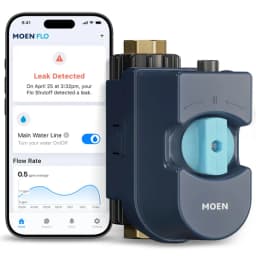
Moen Flo Smart Water Monitor and Automatic Shutoff (3/4 in)
Installs on the main line, watches flow, pressure and temperature, and closes its own valve when it detects a leak, so a burst pipe while you are away stays a small one.
- Closes its own valve when it detects a leak
- Watches flow, pressure and temperature
- No hub needed
- Plumber install recommended
- Sized for a 3/4 in main line
About $624 at Moen, checked Oct 12, 2026
Check price at MoenPaid link. We earn a commission at no cost to you.
Kidde battery-powered carbon monoxide alarm
Battery-powered, so it works in an outage. Needed whenever a generator, fuel heater or camp stove is in use. under $100.
- Battery powered, keeps working during an outage
- Easy to add one on each sleeping level
- Alarm only, it does not shut off the generator
Under $100, live price on Amazon
Check price on AmazonPaid link. We earn a commission at no cost to you.
The bottom line
From published specs and our sizing rules. Not lab tested.
- 1
Keep the furnace on
Westinghouse iGen2550DFc Dual Fuel Inverter
1,900 running watts
Check price on AmazonPaid link
- 2
Quiet, indoor power
Jackery Explorer 2000 v2
2,042 Wh battery
Check price on AmazonPaid link
- 3
Know if a pipe bursts
GoveeLife Smart Water Leak Detector 1s, 3-Pack with Gateway
Check price on AmazonPaid link
Frequently asked questions
At what temperature do pipes freeze?
Water freezes at 32 F, but pipes in unheated areas are mainly at risk once the outdoor temperature falls to about 20 F, according to University of Illinois research widely cited by the Red Cross. Pipes inside a heated house are safe until the house itself cools close to freezing.
How long can a house go without heat before pipes freeze?
Our estimate for room air to fall from 68 F to 40 F is about 8 to 20 hours in a drafty older home, 16 to 40 hours in an average home and 32 to 80 hours in a tight newer home, depending on whether it is 0 F or 30 F outside. Pipes in crawl spaces, garages and outside walls can freeze in about 6 hours at 20 F or below.
Will pipes freeze at 32 degrees overnight?
Usually not inside a house. At 32 F outside, a house without heat cools slowly and the night is over before interior pipes get near freezing. Exposed pipes outside or in an uninsulated crawl space can freeze in a long night at 32 F if wind is blowing on them.
Does dripping a faucet stop pipes from freezing?
It helps. Moving water is slower to freeze, and an open faucet relieves the pressure that builds behind an ice blockage, which is what actually bursts the pipe. Drip both hot and cold on faucets fed by pipes in outside walls.
When should I drain my pipes in a power outage?
When the heat will be off longer than your house can hold out, and it is 20 F or colder outside. In an average home that is roughly a day; in a drafty home, less. Shut off the main, open all faucets from the top floor down, flush the toilets and turn off the water heater before draining it.
Can I use a space heater to keep pipes from freezing in an outage?
An electric space heater needs power you do not have, and a 1,500 W heater drains a 2 kWh power station in about an hour. Running the gas furnace blower on that same power station lasts about 6 hours and heats the whole house. Never use a grill, camp stove or outdoor propane heater indoors.
Will homeowners insurance cover a burst pipe from a power outage?
Sudden burst pipes are commonly covered, but many policies exclude freeze damage if the home was left without heat or the water was not shut off when you were away. Read your policy's freezing clause and keep the heat on or the lines drained.
7 products are linked on this page. We have not lab-tested these products; picks are based on published specifications and our sizing rules. Amazon prices change, so we show a range and link to the live price. See our disclosure.
Size it for your home
Related guides
More home water guides
- Best Reverse Osmosis System and What Each Gallon Costs
- Under Sink Water Filter vs Reverse Osmosis: Which Do You Need?
- Best Water Softener for Well Water With Iron, and When a Filter Goes First
- Best Water Softener for a Family of 4: Why 48K Is Usually the Right Size
- Best Whole House Water Softener for 2026, Sized by the Math
- Best Water Filter for Well Water: Test First, Then Buy
- Best Tankless Water Heater by Fuel, Flow and Home Size
- Best Whole House Water Filter for City or Well Water, Sized by Flow
- Best Heat Pump Water Heater: Tank Size, Yearly Savings and Fit
- Best Sump Pump Battery Backup Systems for Power Outages
Marcus Reed
Founder and Editor, CrunchYourDollars
Marcus Reed builds the sizing tools on CrunchYourDollars. He is a software engineer with a long-running PC hardware and power supply habit, which is where the watts, watt-hours and surge math on this site comes from. Product specs are pulled from manufacturer data sheets, electricity rates from the U.S. Energy Information Administration, and water chemistry rules from the Water Quality Association. He is not a licensed electrician or plumber: the tools show the math and the matching models so you can make the call, and anything involving your electrical panel should be checked by a licensed pro.
More about CrunchYourDollars and how we researchGet notified when we add tools
An occasional email when a new sizing tool goes live or the product database is refreshed. No spam, unsubscribe anytime.