If your city water tastes or smells of chlorine, buy a carbon under-sink filter like the Waterdrop 10UA. It connects to your existing faucet, needs no power, wastes no water and costs about $31 a year, around 4 cents a gallon at 2 gallons a day.
Our picks at a glance
From published specs and our sizing rules. Not lab tested.
- 1
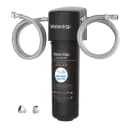
Better taste, lowest cost
Waterdrop 10UA Under Sink Filter (direct connect)
Check price at WaterdropPaid link
- 2
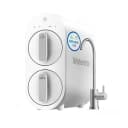
Remove dissolved solids
Waterdrop G2 Tankless Reverse Osmosis System (400 GPD)
Check price at WaterdropPaid link
- 3
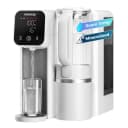
RO with no install
Waterdrop M6SL Countertop Mineral RO System (no install)
Check price at WaterdropPaid link
If you want dissolved solids out (TDS, the minerals and salts a carbon filter passes), buy reverse osmosis. The Waterdrop G2 does it for about 10 cents a gallon in filters. Waterdrop's own 10UA page says the carbon filter is not designed to reduce TDS.
Not sure? An inexpensive handheld TDS meter or a lab water test answers it before you spend $250.
Top picks, and why
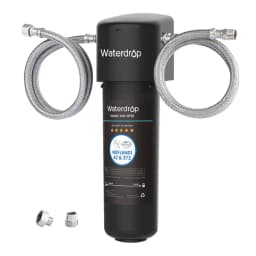
Waterdrop 10UA Under Sink Filter (direct connect)
Direct connect to your faucet, NSF/ANSI 42 and 372, 11,000 gallons or 12 months per $30.99 filter. About 4 cents a gallon. Around $59, often less with a code on the site.
About $59 at Waterdrop, checked Oct 12, 2026
Check price at WaterdropPaid link. We earn a commission at no cost to you.
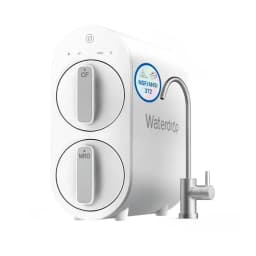
Waterdrop G2 Tankless Reverse Osmosis System (400 GPD)
Tankless RO, 400 GPD, 7 stages, around $250. Filters about $75 a year, 10 cents a gallon. Needs an outlet and a drain line.
About $250 at Waterdrop, checked Oct 12, 2026
Check price at WaterdropPaid link. We earn a commission at no cost to you.
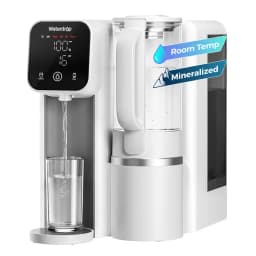
Waterdrop M6SL Countertop Mineral RO System (no install)
Countertop RO, fill and plug in. NSF/ANSI 58 and 372, one $70 filter a year, around $269. The pick for renters.
About $269 at Waterdrop, checked Oct 12, 2026
Check price at WaterdropPaid link. We earn a commission at no cost to you.
Compare every pick
Paid links: we earn a commission if you buy, at no cost to you. Amazon prices change often, so we show a range and link to the live price.
The 30-second decision
Chlorine taste or smell, city water, no specific contaminant worry: carbon under-sink filter. Cheapest, simplest, full flow.
High TDS, a water test that flags something a carbon filter is not certified for, or you just want the most purified drinking water: reverse osmosis.
Well water with iron, rotten egg smell or hardness: neither one fixes the whole house. Test, then see our well water filter guide and the water softener sizer.
Cost per gallon, side by side
At 2 gallons of drinking and cooking water a day (730 gallons a year): Waterdrop 10UA about $31 a year, 4 cents a gallon. M6SL countertop RO about $70 a year, 10 cents. G2 tankless RO about $75 a year, 10 cents. G3P600 RO about $145 a year, 20 cents.
Over five years including the purchase price: the 10UA is about 5 cents a gallon, the G2 about 17 cents and the G3P600 about 32 cents.
RO also sends water to the drain: at 2:1, about 365 gallons a year for a household drinking 2 gallons a day. A carbon filter sends none.
Waterdrop 10UA Under Sink Filter (direct connect)
One cartridge, one twist to change it. No power, no drain line, no tank.
About $59 at Waterdrop, checked Oct 12, 2026
Check price at WaterdropPaid link. We earn a commission at no cost to you.
Waterdrop G2 Tankless Reverse Osmosis System (400 GPD)
The lowest filter cost of the under-sink RO systems we compared, about $75 a year.
About $250 at Waterdrop, checked Oct 12, 2026
Check price at WaterdropPaid link. We earn a commission at no cost to you.
Install: what each one needs under the sink
Carbon direct connect (10UA): tees into the cold supply line and feeds your existing faucet. No drilling, no outlet. Works at 10 to 125 psi.
Ultrafiltration (TSA-UF): three cartridges and a separate faucet (not included), still no electricity and no waste water. The 0.01 micron stage catches finer particles than carbon alone.
Tankless RO (G2, G3P600): needs a dedicated faucet, a drain saddle and an outlet under the sink. Countertop RO (M6SL) needs none of that, only counter space.
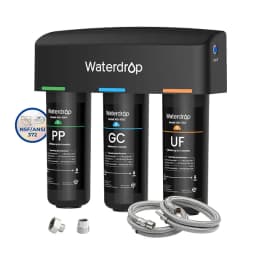
Waterdrop TSA-UF Ultrafiltration Under Sink System
Sediment, carbon and 0.01 micron ultrafiltration with no power and no waste water, around $140. Faucet sold separately.
About $140 at Waterdrop, checked Oct 12, 2026
Check price at WaterdropPaid link. We earn a commission at no cost to you.
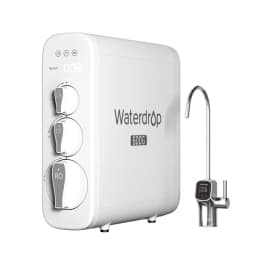
Waterdrop G3P600 Tankless Reverse Osmosis System (600 GPD)
NSF/ANSI 42, 58 and 372, 600 GPD tankless, around $439. The RO to buy if certification matters most.
About $439 at Waterdrop, checked Oct 12, 2026
Check price at WaterdropPaid link. We earn a commission at no cost to you.
The bottom line
From published specs and our sizing rules. Not lab tested.
- 1
Better taste, lowest cost
Waterdrop 10UA Under Sink Filter (direct connect)
Check price at WaterdropPaid link
- 2
Remove dissolved solids
Waterdrop G2 Tankless Reverse Osmosis System (400 GPD)
Check price at WaterdropPaid link
- 3
RO with no install
Waterdrop M6SL Countertop Mineral RO System (no install)
Check price at WaterdropPaid link
Frequently asked questions
Is reverse osmosis better than an under sink filter?
It removes more, including dissolved solids that carbon passes, but it costs more per gallon, needs power and a drain, and wastes some water. If your only complaint is chlorine taste, a carbon under-sink filter is enough.
Does an under sink carbon filter reduce TDS?
Not meaningfully. Waterdrop says its 10UA carbon filter is not designed for significant TDS reduction. Reverse osmosis is the home method for lowering TDS.
How much does an under sink water filter cost per gallon?
About 4 cents for the Waterdrop 10UA at 2 gallons a day: one $30.99 cartridge every 12 months. Reverse osmosis runs about 10 to 22 cents a gallon in filters.
Do I need an electrician or plumber?
No electrician for any of these. A carbon direct-connect filter is a DIY job on the cold supply line. Under-sink RO needs a faucet hole and drain saddle, which many people DIY. Countertop RO needs no install at all.
How long does an under sink water filter last?
The Waterdrop 10UA cartridge is rated for 11,000 gallons or 12 months, whichever comes first. At 2 gallons a day you use about 730 gallons a year, so the 12 month limit is the one you hit. The TSA-UF cartridges last up to 12 months per set.
Does an under sink water filter remove lead?
Only if it is certified for lead reduction, which falls under NSF/ANSI 53 for filters and NSF/ANSI 58 for RO systems. NSF/ANSI 372 on a label means the filter's own parts are lead-free, not that it removes lead. The 10UA is certified to NSF/ANSI 42 and 372, so check any model's certification listing for a specific lead claim before you buy it for lead.
What is the difference between ultrafiltration and reverse osmosis?
Ultrafiltration pushes water through a membrane with pores around 0.01 micron, which catches fine particles using only line pressure, with no power and no waste water. Reverse osmosis uses a much tighter membrane that also removes dissolved solids, and it sends some water to the drain to flush the membrane. The Waterdrop TSA-UF is ultrafiltration, and the G2 and G3P600 are RO.
How much water does reverse osmosis waste compared with a carbon filter?
A carbon filter like the 10UA sends no water to the drain. An RO system at a 2:1 pure to drain ratio sends 1 gallon to the drain for every 2 you drink, about 365 gallons a year at 2 gallons a day. A 3:1 unit like the M6SL cuts that to about 243 gallons a year.
What TDS level means I need reverse osmosis?
The EPA's secondary drinking water guideline for total dissolved solids is 500 mg/L, a non-enforceable level based on taste and scaling. If a TDS meter or lab test reads above that, RO is the home method that brings it down. Below it, choose based on the specific contaminants on your water test, not the TDS number alone.
Is an under sink water filter worth it compared with bottled water?
For most households on city water, yes. The 10UA works out to about 4 cents a gallon in filters at 2 gallons a day, and about 5 cents a gallon over five years including the purchase price. RO comes to about 17 cents a gallon over five years with the G2, so compare those figures with what you pay per gallon of bottled water.
7 products are linked on this page. We have not lab-tested these products; picks are based on published specifications and our sizing rules. Amazon prices change, so we show a range and link to the live price. See our disclosure.
Size it for your home
Marcus Reed
Founder and Editor, CrunchYourDollars
Marcus Reed builds the sizing tools on CrunchYourDollars. He is a software engineer with a long-running PC hardware and power supply habit, which is where the watts, watt-hours and surge math on this site comes from. Product specs are pulled from manufacturer data sheets, electricity rates from the U.S. Energy Information Administration, and water chemistry rules from the Water Quality Association. He is not a licensed electrician or plumber: the tools show the math and the matching models so you can make the call, and anything involving your electrical panel should be checked by a licensed pro.
More about CrunchYourDollars and how we researchGet notified when we add tools
An occasional email when a new sizing tool goes live or the product database is refreshed. No spam, unsubscribe anytime.