Most preparedness advice is about a storm: three days without power, then the trucks roll in. This series is about the harder case, a crisis that lasts weeks or months, where power, water, fuel and food deliveries may all stop at once. That could be a war, an attack on the grid, a regional disaster or a long breakdown in supply. Governments now plan for it openly. FEMA suggests households keep two weeks of supplies, Sweden mailed every household a brochure titled In case of crisis or war in 2024, and the European Union's 2025 preparedness strategy asks people to be able to manage on their own for at least 72 hours.
Our picks at a glance
From published specs and our sizing rules. Not lab tested.
- 1
Start with water
Saratoga Farms 5 Gallon Stackable Water Containers, 4 Pack (20 gal)
20 gallons in 4 jugs
Check price on AmazonPaid link
- 2
Then food
ReadyWise Emergency Food Supply Bucket, 132 Servings
132 servings
Check price on AmazonPaid link
- 3
And information
Midland ER310 Emergency Crank Weather AM/FM Radio
Check price on AmazonPaid link
- 4
A way to cook
Gas One GS-3400P Dual Fuel Butane or Propane Stove
2 fuels
Check price on AmazonPaid link
The good news is that a household can cover a lot with a modest budget, if it buys in the right order. Work through what runs out first: water within days, heat in winter within hours, food within weeks, then the things that keep you healthy and informed. Build in three stages, 72 hours, two weeks and three months, and finish each stage before starting the next.
Each section below links to a full guide in the series with sizing math and products. We do not test gear ourselves. Specs come from the makers and our own power and fuel calculations, and we say where a number is an estimate.
Top picks, and why
Saratoga Farms 5 Gallon Stackable Water Containers, 4 Pack (20 gal)
- Stackable
- Vented
- HDPE
Four stackable 5 gallon jugs, 20 gallons in all: five days of water for a family of four at Ready.gov's one gallon per person per day, or 20 days for one person. $100 to $250.
- Stack to save floor space
- Each one can be carried, about 40 lb full
- BPA-free HDPE
- 20 gallons total, about 5 days for a family of 4
$100 to $250, live price on Amazon
Check price on AmazonPaid link. We earn a commission at no cost to you.
ReadyWise Emergency Food Supply Bucket, 132 Servings
- 25 yr shelf life
- 13 meal types
- Stackable
A stackable bucket of just-add-water meals with up to a 25 year shelf life, an easy first layer of food storage. Count calories, not servings. under $100.
- Up to 25 year shelf life
- Just add water
- Stackable bucket
- Sold by servings, not calories, so check the label before counting days
Under $100, live price on Amazon
Check price on AmazonPaid link. We earn a commission at no cost to you.
Midland ER310 Emergency Crank Weather AM/FM Radio
NOAA alerts plus AM and FM on hand crank, solar, battery or AA power, with a flashlight and phone charging. When phones and internet fail, this is how you hear what is happening. under $100.
Under $100, live price on Amazon
Check price on AmazonPaid link. We earn a commission at no cost to you.
Gas One GS-3400P Dual Fuel Butane or Propane Stove
- Butane or propane
- Piezo ignition
- Carry case
A dual fuel single burner for butane or 1 lb propane, to boil water and cook stored food when the stove is dead. Outdoors only. under $100.
- Runs on butane or 1 lb propane
- Piezo ignition, no matches needed
- Pressure sensor ejects the cartridge
- One burner
- Outdoors or well ventilated only
Under $100, live price on Amazon
Check price on AmazonPaid link. We earn a commission at no cost to you.
Compare every pick
Paid links: we earn a commission if you buy, at no cost to you. Amazon prices change often, so we show a range and link to the live price.
Stage 1: the first 72 hours
Cover the basics for everyone in the house: a gallon of water per person per day, three days of food that needs no cooking, flashlights or lanterns with spare batteries, a battery or crank radio, a first aid kit, a week of prescription medicine, phone power banks, some cash in small bills, and copies of IDs and insurance papers in a waterproof bag.
Pack a go bag too, in case you have to leave: water, food, a filter, a first aid kit, clothes, a light, a radio, medicine, documents and cash. Our power outage kit checklist lays out this stage tier by tier with prices.
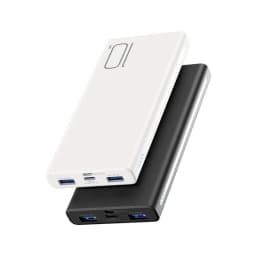
Lepro (LE) 1000LM Battery Powered LED Camping Lantern
1,000 lumens on disposable batteries, so it still works on day five with nothing to charge. Lights a whole room. under $100.
Under $100, live price on Amazon
Check price on AmazonPaid link. We earn a commission at no cost to you.
ReadyWise Emergency Food Supply 72 Hour Kit, 30 Servings
30 servings of freeze-dried meals in sealed pouches, light enough for a go bag. Add water and eat. under $100.
Under $100, live price on Amazon
Check price on AmazonPaid link. We earn a commission at no cost to you.
Stage 2: two weeks at home
Water: 14 gallons per person, in stackable jugs or a 55 gallon drum, plus a bathtub bladder to fill on a warning. Our emergency water storage guide covers containers, filters and disinfection.
Food: about 28,000 calories per adult, mostly canned food and pantry staples you already eat, plus a manual can opener. Our emergency food storage guide does the calorie math.
Cooking and heat: a propane camp stove with fuel, used outdoors only, and a plan to stay warm without the furnace. Our cooking without power guide sizes the fuel, and our best heat source for a power outage guide covers indoor-safe heaters and keeping a gas furnace running on backup power.
Sanitation and health: toilet bags and a bucket toilet, soap and sanitizer, a full first aid kit and a bleeding control kit. Our sanitation and first aid guide covers what to stock.
Augason Farms 55 Gallon Water Storage Barrel
- Food grade
- BPA free
- 2 bungs
A food-grade 55 gallon drum, about two weeks of water for a family of four. Place it before you fill it, since it weighs about 460 lb full. $100 to $250.
- 55 gallons, about two weeks of water for 4 people
- Food-grade, BPA-free
- Two bung fittings
- About 460 lb full, place it before you fill it
- Needs a siphon or drum pump to draw from
$100 to $250, live price on Amazon
Check price on AmazonPaid link. We earn a commission at no cost to you.
Reliance Double Doodie Toilet Waste Bags with Bio-Gel, 12 Bags
- Bio-Gel
- Leak proof
Leak-proof toilet bags with gel that solidifies waste, for when toilets cannot flush. The item almost everyone forgets. under $100.
- Gel solidifies waste
- Sealable leak-proof outer bag
- Fits Luggable Loo and bucket toilets
- 12 bags, so stock several packs for a long outage
Under $100, live price on Amazon
Check price on AmazonPaid link. We earn a commission at no cost to you.
Stage 3: three months and beyond
At this stage, storing everything stops being realistic and making things takes over. Water comes from rain, a well or a nearby source, run through a filter and disinfected. Food becomes bulk rice, beans, oats, oil and canned protein sealed for the long term, plus a garden if you have land. Cooking fuel becomes stored propane, then wood and sun.
Power becomes solar. A generator is great for a week, but fuel runs out and gasoline goes stale. A LiFePO4 power station with 400 to 1,000 W of panels can keep a fridge or freezer, lights, phones, radios and medical devices going for as long as the sun shines. Our solar power for a long grid-down guide sizes it.
Communication becomes two-way: GMRS radios to coordinate with family and neighbors, and a satellite messenger to reach people far away. Our emergency communication guide covers what works when cell towers are down.
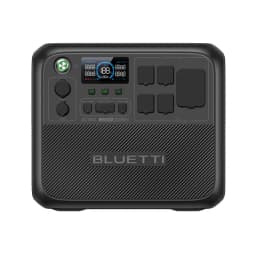
2,048Wh battery
BLUETTI AC200L
- 2.0 kWh
- expands to 8 kWh
- 2,400 W continuous
2,048 Wh of LiFePO4 with up to 1,200 W of solar input. With four 200 W panels it can make about 2,400 Wh on a decent day, enough for a fridge, lights, phones and a CPAP. about $899.
- 30 A RV outlet for a camper
- Expands to 8,192 Wh, about 4 days of fridge
- 1,200 W solar input
- Over 60 lb at 62.4 lb
- Not split-phase, no 240V
About $899 at BLUETTI, checked Oct 10, 2026
Check price at BLUETTIPaid link. We earn a commission at no cost to you.
Sawyer Squeeze Water Filtration System (SP129)
- 2 oz
- Squeeze or gravity
- Backflush to clean
A 0.1 micron filter that runs inline in a bucket gravity setup, turning rain or well water into drinking water when paired with chlorine tablets for viruses. under $100.
- 0.1 micron absolute filter
- Two 32 oz pouches, fits 28 mm bottle threads
- Works in a gravity system
- Does not claim to remove viruses, so disinfect too
Under $100, live price on Amazon
Check price on AmazonPaid link. We earn a commission at no cost to you.
Midland GXT1000VP4 GMRS Two-Way Radios, 2 Pack
- NOAA alert
- AA backup
- Headsets
A pair of GMRS radios with NOAA weather alert and AA backup, for keeping in touch around the neighborhood when phones are down. Needs an FCC license, no exam. under $100.
- NOAA weather alert built in
- Runs on AA when the packs die
- 50 channels, 142 privacy codes
- GMRS needs an FCC license, no exam
- Real range is far below the box claim
Under $100, live price on Amazon
Check price on AmazonPaid link. We earn a commission at no cost to you.
What matters more than gear
Skills beat equipment. Learn first aid and bleeding control, how to shut off your home's water, gas and electricity, how to purify water, and how to cook on your stove before you need it. Practice a weekend without using the grid. It will show you every gap in your plan.
People beat stockpiles. Know your neighbors, agree on how you will check on each other, and plan for anyone in the house with medical needs, small children or pets. A street that shares a generator, a well and watches out for each other does far better than one house with a full basement.
Keep it quiet and keep it rotating. Do not advertise what you have stored, eat and replace food and water on a schedule, and check batteries and fuel twice a year, when the clocks change.
The bottom line
From published specs and our sizing rules. Not lab tested.
- 1
Start with water
Saratoga Farms 5 Gallon Stackable Water Containers, 4 Pack (20 gal)
20 gallons in 4 jugs
Check price on AmazonPaid link
- 2
Then food
ReadyWise Emergency Food Supply Bucket, 132 Servings
132 servings
Check price on AmazonPaid link
- 3
And information
Midland ER310 Emergency Crank Weather AM/FM Radio
Check price on AmazonPaid link
- 4
A way to cook
Gas One GS-3400P Dual Fuel Butane or Propane Stove
2 fuels
Check price on AmazonPaid link
Frequently asked questions
How do I start preparing for a long-term emergency?
In stages. First cover 72 hours: water, no-cook food, light, a radio, first aid and medicine. Then build to two weeks at home, as FEMA suggests. Then plan for three months with ways to make water, cook and generate power rather than only store them.
What should I stock first?
Water, because you can only last days without it. Then heat if it is winter, then food, then sanitation, first aid, light and a radio. Do not buy expensive gear before you have the basics.
How much water and food for two weeks?
Per person: 14 gallons of water at Ready.gov's one gallon per day, and about 28,000 calories of food at 2,000 a day for an adult. Children need less food, hot weather and illness need more water.
How do I prepare for war or a grid collapse at home?
The same way as for any long disaster, scaled up: store water and food for weeks, have a way to cook and stay warm without the grid, keep power going with solar and a battery, keep a radio for news, stock sanitation and first aid supplies, and know your neighbors. For nuclear threats, know where your shelter space is and keep a battery radio.
Is a generator or solar better for a long emergency?
Both have a place. A generator delivers lots of power for a short outage. In a crisis lasting weeks or months, fuel becomes the limit, so solar panels with a battery are what keep essentials running.
How often should I check my emergency supplies?
Twice a year is a good habit. Replace home-bottled water every six months per Ready.gov, eat and replace food before its date, test batteries and radios, cycle your power station, and check fuel.
11 products are linked on this page. We have not lab-tested these products; picks are based on published specifications and our sizing rules. Amazon prices change, so we show a range and link to the live price. See our disclosure.
Size it for your home
More guides
- Emergency Water Storage: How Much to Store and How to Make Any Water Safe
- Emergency Food Storage: How Much Food per Person for 2 Weeks to 3 Months
- Cooking Without Power: Stoves, Fuel and How Much to Store
- Solar Power for a Long Grid-Down: Keep the Fridge, Lights and Radio Running
- Emergency Communication When Phones Go Down: Radios, GMRS and Satellite
- Sanitation and First Aid When Water and Hospitals Are Stretched
- Prepper Budget: How Much to Spend, and How Much Prep Is Too Much (or Not Enough)
- Power Outage Kit Checklist: What to Buy, Tier by Tier
- Best Heat Source for a Power Outage: What Keeps You Warm
Marcus Reed
Founder and Editor, CrunchYourDollars
Marcus Reed builds the sizing tools on CrunchYourDollars. He is a software engineer with a long-running PC hardware and power supply habit, which is where the watts, watt-hours and surge math on this site comes from. Product specs are pulled from manufacturer data sheets, electricity rates from the U.S. Energy Information Administration, and water chemistry rules from the Water Quality Association. He is not a licensed electrician or plumber: the tools show the math and the matching models so you can make the call, and anything involving your electrical panel should be checked by a licensed pro.
More about CrunchYourDollars and how we researchGet notified when we add tools
An occasional email when a new sizing tool goes live or the product database is refreshed. No spam, unsubscribe anytime.